Tax Attorney in Santa Clara, California
Federal IRS and California state tax representation for taxpayers in Santa Clara and the surrounding Silicon Valley footprint — from the Intel global headquarters at 2200 Mission College Boulevard, the AMD headquarters at 2485 Augustine Drive, the NVIDIA headquarters at 2788 San Tomas Expressway, the Applied Materials headquarters at 3050 Bowers Avenue, the Ericsson North America campus on Tasman Drive, and the Lockheed Martin Space Systems campus a short drive away in Sunnyvale, through the Levi's Stadium and 49ers Hall of Fame complex at 4900 Marie P. DeBartolo Way, the Santa Clara Convention Center, the Santa Clara University campus on The Alameda, the Mission Santa Clara de Asís, and across the residential neighborhoods of Old Quad, Killarney Farms, Rivermark, Lawrence Station, Forest Park, Birdland, North Glen, Bowers, and the Mission College district. Our California Bar-admitted attorneys handle IRS audits, FTB residency examinations on post-2020 departures to Austin, Reno, Boise, and Phoenix, RSU and ISO equity-comp questions with the AMT trap on pre-IPO ISO exercises across Intel, AMD, NVIDIA, Applied Materials, and the broader semiconductor and AI accelerator ecosystem, IRC §1202 Qualified Small Business Stock originate-here positions, IRC §83(b) elections, IRC §409A deferred-comp problems, NFL professional-athlete jock-tax allocation under IRC §61 with the visiting-team duty-day formula for 49ers home games and Super Bowl LIV host-city payouts, FBAR and Form 8938 disclosures for the Indian-American, Chinese-American, and Vietnamese-American H-1B and L-1 community, Streamlined Filing Compliance Procedure submissions, U.S. Tax Court petitions designated to San Francisco or to the San Jose session, and California Office of Tax Appeals matters routed to Sacramento or by remote video. Headquartered in Los Angeles at 1100 S. Robertson Boulevard, with full California Bar admission and a federal U.S. Tax Court bar to appear directly in the Robert F. Peckham Federal Building at 280 S. 1st Street in San Jose — five miles south — and across the Northern District of California San Jose Division.
By Parham Khorsandi, Esq. — California Bar #266658. Admitted to practice before the United States Tax Court. Last Reviewed: .
Request a Free Consultation
100% Free · Confidential · No Obligation
Cal Bar Admitted
Verifiable license #266658
U.S. Tax Court
Federal trial admission
BBB Accredited
A+ rating
5.0 / 72 Reviews
Google Business Profile
Santa Clara taxpayers facing IRS or FTB action: a semiconductor- and AI-anchored caseload built on Intel, AMD, NVIDIA, and Applied Materials equity comp, QSBS, AMT, 49ers jock-tax allocation, H-1B foreign-disclosure exposure, and post-2020 departing-resident audits
Santa Clara is the eighth-largest city in the San Francisco Bay Area and the operational center of the global semiconductor and AI accelerator industry, with a 2026 city population of about 130,000 and a daytime working population that roughly doubles that figure. The city sits inside Santa Clara County — the county is named after the city, which sits two miles north of the county seat in San Jose — and forms the dense industrial core of Silicon Valley. The tax-controversy mix here splits along five anchors that no other California city carries in the same concentration. First, the chip-and-accelerator equity-compensation complex: Intel's global headquarters on Mission College Boulevard, AMD on Augustine Drive, NVIDIA on San Tomas Expressway, Applied Materials on Bowers Avenue, Marvell on Scott Boulevard, the Ericsson North America campus on Tasman Drive, and the Lockheed Martin Space Systems Sunnyvale campus a short drive west across the Sunnyvale line all produce a deep RSU, ISO, ESPP, and IRC §83(b) caseload, with the AMT trap on pre-IPO ISO exercises — and the NVIDIA price spike since 2023 — driving a recurring stream of Form 6251 problems and large-balance assessments. Second, IRC §1202 Qualified Small Business Stock for Intel, AMD, and NVIDIA founders, early employees, and acquired-startup principals where the $10 million or 10x basis exclusion can disappear if any one of the operating-company-asset, redemption, or working-capital traps is missed. Third, Levi's Stadium NFL jock-tax allocation: the 49ers home games, the Super Bowl LIV host-year payouts, the visiting-team duty-day formula under IRC §61 with the FTB's parallel California sourcing analysis, and the Schedule C side-income from stadium events, suite operations, and the 49ers Hall of Fame retail footprint. Fourth, FBAR and Form 8938 disclosure for the Indian-American, Chinese-American, and Vietnamese-American visa-holder community concentrated in Rivermark, Lawrence Station, the Mission College district, and the apartments along El Camino Real and Lawrence Expressway. Fifth, post-2020 FTB residency audits on Santa Clara departures to Austin, Reno, Boise, and Phoenix — the chip-industry workforce has been the single largest source of FTB residency examinations in the South Bay since the pandemic remote-work shift.
$100M+
Total tax relief secured
2,000+
Tax cases resolved
5.0
Average rating · 72 reviews
CA-Based
LA HQ, serving all of Santa Clara
Past results do not guarantee future outcomes. Each tax case is unique and turns on individual facts and IRS or FTB discretion.
A California firm representing Santa Clara taxpayers across IRS, FTB, CDTFA, EDD, OTA, and the Santa Clara County Assessment Appeals Board
Victory Tax Lawyers, LLP is a California-licensed tax-law firm with its principal office at 1100 S. Robertson Boulevard in Los Angeles. Both attorneys hold the State Bar of California license in active standing — Parham Khorsandi, Cal Bar #266658, and Amir Boroumand, Cal Bar #269570 — and both are admitted to practice before the United States Tax Court. Because the firm is California-admitted, we appear directly before the FTB, CDTFA, EDD, and the California Office of Tax Appeals on behalf of Santa Clara clients without a Form 2848 workaround or out-of-state co-counsel arrangement — and we appear directly in U.S. Tax Court trial sessions in San Francisco and at the U.S. District Court for the Northern District of California San Jose Division at the Robert F. Peckham Federal Building at 280 S. 1st Street, five miles south of the Santa Clara city limits.
Santa Clara occupies roughly 19 square miles in the heart of Silicon Valley, bordered by Sunnyvale to the west, Cupertino to the southwest, San Jose to the south and east, and the Guadalupe River corridor and Mineta San José International Airport approach pattern to the southeast. The city is the namesake of Santa Clara County and the home of the oldest institution of higher education in California — Santa Clara University, founded in 1851 on the grounds of Mission Santa Clara de Asís, the eighth of the twenty-one California missions. The urban geography splits into the Old Quad historic core surrounding the Mission and the SCU campus on The Alameda; the Mission College and Rivermark commercial corridor along Mission College Boulevard and Tasman Drive holding Intel, NVIDIA, Marvell, the Santa Clara Convention Center, Levi's Stadium, the 49ers headquarters and Hall of Fame, and the Great America entertainment complex; the El Camino Real and Lawrence Expressway commercial spine; the residential Killarney Farms, Forest Park, Birdland, North Glen, Bowers, and Lawrence Station neighborhoods; and the western Santa Clara fringe along the Sunnyvale line where the Applied Materials headquarters anchors Bowers Avenue. The population sits at roughly 130,000 inside the city, with the surrounding Sunnyvale, Cupertino, San Jose, and Milpitas footprints raising the immediate workforce-commuter pool well past one million.
Five economic and demographic anchors shape the Santa Clara tax-controversy profile. First, the semiconductor and AI accelerator equity-compensation complex. Intel runs its global headquarters from the Robert Noyce Building at 2200 Mission College Boulevard. AMD operates its corporate headquarters at 2485 Augustine Drive. NVIDIA built its global headquarters at 2788 San Tomas Expressway — the two Endeavor and Voyager buildings have become a Santa Clara landmark since completion. Applied Materials operates its global headquarters at 3050 Bowers Avenue and is the largest single-site semiconductor capital-equipment manufacturer in the world. Marvell Technology runs from 5488 Marvell Lane on Scott Boulevard. The Ericsson North America campus sits on Tasman Drive. Lockheed Martin Space Systems anchors the adjacent Sunnyvale industrial corridor and draws a significant share of its workforce from Santa Clara neighborhoods. The Restricted Stock Unit, Incentive Stock Option, Employee Stock Purchase Plan, IRC §83(b) early-exercise election, and IRC §409A deferred-compensation streams from this ecosystem drive a recurring caseload that no other California city matches in semiconductor concentration. The Alternative Minimum Tax trap on pre-IPO ISO exercises — where the bargain element on exercise is an AMT preference item under IRC §56(b)(3) even when no regular-tax gain has been recognized — remains the single most common large-dollar surprise for Santa Clara engineers and executives, and the NVIDIA share-price run since 2023 has produced an unusually large cohort of long-tenured employees with deeply in-the-money pre-IPO grant tranches that have already vested but have not been sold for the §1202 hold or for personal liquidity reasons.
Second, IRC §1202 Qualified Small Business Stock. Santa Clara County is the single largest originator of QSBS positions in the country, and Santa Clara city sits at the center of that pipeline through the Intel, AMD, and NVIDIA acquired-startup history (NVIDIA's Mellanox, Cumulus, OmniML, and other tuck-ins; AMD's Xilinx merger; Intel's Habana Labs, Mobileye, Granulate, and other deals) and the broader chip-design startup ecosystem that flows into and out of those acquirers. Founders, early employees, and angel investors who hold C-corporation stock acquired at original issuance from a domestic operating company with gross assets under $50 million can exclude up to the greater of $10 million or 10x basis on a sale after a five-year hold under IRC §1202(b). The traps are dense: the active-business requirement under §1202(e), the working-capital limit, the redemption rules of §1202(c)(3) that can disqualify the entire position, the LLC-conversion-to-C-corporation timing under §351, the stacking strategies across trusts and family members, and the federal-versus-California conformity gap (California decoupled from §1202 in 2013, so the exclusion is federal-only). A clean QSBS exit on a $20 million sale can save $4.7 million in federal tax if the position qualifies, and produce a fight with the IRS if any one of the qualifying conditions is wrong.
Third, the Levi's Stadium and 49ers professional-athlete jock-tax allocation. Levi's Stadium at 4900 Marie P. DeBartolo Way has hosted San Francisco 49ers home games since 2014 and hosted Super Bowl LIV in February 2020. The NFL professional-athlete jock-tax allocation under IRC §61, the visiting-team duty-day formula codified across the state Departments of Revenue, and the FTB's parallel California sourcing analysis route through every Santa Clara-played game. Each visiting NFL player who suits up at Levi's Stadium has California-source income for the duty days spent in Santa Clara during the trip, and the home-team 49ers roster has California-source income on all duty days. The Super Bowl LIV host year added a one-time spike in California-source allocations for both rosters and for the wider sports-services workforce. The 49ers Hall of Fame retail and event footprint adjacent to the stadium and the Schedule C side-income from stadium events, suite operations, sponsorship activations, and Levi's Stadium-hosted concerts and tournaments fold into the same controversy stream.
Fourth, the visa-holder and immigrant-community foreign-account disclosure caseload. The H-1B and L-1 workforce concentrated at Intel, AMD, NVIDIA, Applied Materials, Marvell, and Ericsson, and living in Rivermark, Lawrence Station, the Mission College district, Killarney Farms, and the apartment corridors along El Camino Real, Pruneridge Avenue, and Lawrence Expressway, produces a steady FBAR (FinCEN Form 114) and Form 8938 (FATCA) disclosure stream — bank accounts in India, demat brokerage accounts, NRE and NRO rupee accounts, PPF and EPF retirement accounts, and parent-and-sibling joint accounts all aggregate into reportable thresholds under 31 USC §5314 and IRC §6038D. The Chinese-American community across Rivermark and the Mission College district carries parallel disclosure exposure on mainland China, Hong Kong, and Taiwan accounts. The Vietnamese-American community, while smaller in Santa Clara proper than in East San Jose along Story Road and Tully Road, still produces an FBAR caseload through SCU's graduate engineering pipeline and the cross-Santa-Clara-County employment patterns at the chip companies. The Streamlined Filing Compliance Procedure — Domestic and Foreign streams — is the most common resolution path for non-willful past noncompliance.
Fifth, the post-2020 departing-resident audit caseload. The pandemic-era remote-work shift drained a substantial cohort of Santa Clara semiconductor engineers and executives to Austin, Texas (where Samsung Austin Semiconductor, Tesla, and the AMD Austin design center compete for the same talent); Reno, Sparks, and Carson City, Nevada; Boise, Meridian, and Eagle, Idaho (where Micron headquarters sits); and Phoenix, Scottsdale, Chandler, and Tempe, Arizona (where TSMC's Fab 21, Intel's Ocotillo expansion, and the broader Arizona semiconductor cluster have absorbed Santa Clara talent). The FTB has prioritized residency-audit examination of these departures under Cal. Rev. & Tax. Code §17014, the closer-connection nine-factor test, and the underlying authorities at Appeal of Stephen Bragg (2003-SBE-002), Appeal of Bindley (OTA 2018-OTA-179P), and Corbett v. FTB. The taxpayer who took an Austin or Phoenix W-2 in 2021 but kept the Rivermark townhouse or the Killarney Farms primary residence, the kids in Pomeroy Elementary or Wilcox High School, the doctors at Kaiser Permanente Santa Clara on Lawrence Expressway or Stanford Health Care, the season tickets at Levi's Stadium, and the cars on California plates is a typical FTB residency-audit profile, and the look-back routinely reaches three or four years.
Your tax rights as a Santa Clara, California taxpayer
Federal taxpayer rights are codified across the Internal Revenue Code and summarized in IRS Publication 1, the Taxpayer Bill of Rights. California layers its own taxpayer-rights regime on top, primarily through the FTB Taxpayer Bill of Rights at Cal. Rev. & Tax. Code Part 10.7 and parallel provisions for CDTFA and EDD. The major rights you can invoke in a Santa Clara tax matter:
Right to representation (federal)
Under IRC §7521(b)(2), an IRS examiner or collection officer must suspend an interview if you state you wish to consult an authorized representative. A signed Form 2848 puts your tax attorney between you and the IRS for the remainder of the matter. The IRS Taxpayer Assistance Center on the 4th Floor at 55 S. Market Street in downtown San Jose — five miles south of Santa Clara — is the practical in-person counter for any Santa Clara taxpayer who needs the limited services that TACs still provide. Most resolution work is handled through the IRS Practitioner Priority Service, secure messaging, and direct contact with the assigned Revenue Officer or Settlement Officer.
Right to representation (California)
FTB Form 3520-PIT (or 3520-BE for entities) appoints a representative with full authority before the Franchise Tax Board. CDTFA Form 392 and EDD DE 48 do the same for sales-tax and payroll matters. Once filed, FTB notices route to counsel — useful in residency-audit examinations on the Austin-Reno-Boise-Phoenix departure pattern, where the same FTB analyst working the matter sits in Sacramento and the taxpayer no longer wants the Sacramento certified-mail notices arriving at the Rivermark, Killarney Farms, or Lawrence Station home for the entire family to see.
Right to Collection Due Process
After a Notice of Federal Tax Lien (IRC §6320) or a Final Notice of Intent to Levy (IRC §6330), you have 30 days to request a Collection Due Process hearing on Form 12153. CDP requests pause federal collection enforcement and preserve U.S. Tax Court review. A wage garnishment on an Intel, AMD, NVIDIA, Applied Materials, Marvell, or Ericsson paycheck stops on a properly filed Form 12153; so does a bank levy on a Wells Fargo, Chase, Bank of America, or Heritage Bank of Commerce account at any of the Santa Clara branches along El Camino Real, Lawrence Expressway, or Bowers Avenue.
Right to OTA appeal
Effective 2018 under AB 102, the California Office of Tax Appeals hears appeals from FTB, CDTFA, and EDD determinations. The appeal window is 30 days from the Notice of Action for FTB matters. Santa Clara cases are heard at OTA Sacramento at 400 R Street, the OTA San Francisco hearing room when scheduled, the OTA Los Angeles hearing room when calendared there, or by remote video appearance — OTA has standardized remote hearings since 2020, and most Santa Clara residency-audit appeals proceed remotely.
Right to U.S. Tax Court review
A Notice of Deficiency triggers a 90-day petition window under IRC §6213(a). Santa Clara petitioners designate San Francisco as the place of trial — the U.S. Tax Court holds regular sessions at the Phillip Burton Federal Building at 450 Golden Gate Avenue in San Francisco, and San Jose is also a designated U.S. Tax Court trial city for certain sessions held at the Robert F. Peckham Federal Building at 280 S. 1st Street. The choice of trial city is set on the petition.
Right to a federal OIC
Under IRC §7122, the IRS may accept less than the full liability where doubt as to collectibility, doubt as to liability, or effective tax administration justifies settlement. Filed on Form 656 with Form 433-A(OIC) or 433-B(OIC). A Santa Clara semiconductor engineer who exercised pre-IPO ISOs in a peak-valuation year and triggered a six- or seven-figure AMT liability, an Indian- or Chinese-American family carrying a multi-year FBAR and assessment problem, or a Levi's Stadium-hosted Schedule C sports-services contractor with a multi-state allocation gap is a typical fact pattern.
Right to a California OIC
FTB has compromise authority under Cal. Rev. & Tax. Code §19443. CDTFA operates a parallel offer program under Cal. Rev. & Tax. Code §6832. EDD compromise authority sits at Cal. Unemp. Ins. Code §1192. Each program has its own form, financial-disclosure standard, and review track. The FTB compromise unit sits in Rancho Cordova; Santa Clara engagements are handled by mail and secure messaging.
Right to a Collection Statute
IRC §6502 gives the IRS 10 years from assessment to collect. California's parallel period under Cal. Rev. & Tax. Code §19255 is 20 years — double the federal CSED. Pull both transcripts before negotiating. The longer California tail matters for the Austin-Reno-Boise-Phoenix departing-resident crowd: the move out of state does not erase the FTB's reach over California-source income from RSU vests on grants made during California residency, ISO exercises during California residency, or Santa Clara-sourced consulting income.
How Victory Tax Lawyers helps Santa Clara taxpayers
Federal & California Offer in Compromise
We prepare and file federal Form 656 with Form 433-A(OIC) under IRC §7122, and FTB Form 4905 PIT or BE with the parallel California financial under Cal. Rev. & Tax. Code §19443. Santa Clara OIC files often turn on equity-comp cash-flow math: the Intel, AMD, NVIDIA, Applied Materials, or Marvell engineer with vested-but-illiquid RSUs counted as W-2 income at vest under IRC §83(a), a pre-IPO AMT preference under IRC §56(b)(3) sitting in deferred AMT credit, an underwater ISO position from a since-acquired startup, and a Reasonable Collection Potential analysis that has to account for the IRS Allowable Living Expense tables built for the San Francisco-Oakland-Hayward MSA. The 1099 Levi's Stadium event-services and 49ers Hall of Fame retail OIC files turn on Schedule C cash-basis reconstruction. The post-departure OIC files for taxpayers now in Austin, Reno, Boise, or Phoenix turn on whether California-source-income tail liability can be addressed federally and at the FTB in parallel.
Installment Agreements (IRS & FTB)
Streamlined IRS IAs under $50,000, Non-Streamlined IAs over $50,000 with Form 433-F disclosure, and Partial Pay Installment Agreements under IRC §6159 that run only through the CSED. FTB monthly-payment plans under FTB Form 3567. For Santa Clara households carrying Rivermark townhouse, Killarney Farms, Forest Park, Birdland, or Old Quad SCU-vicinity mortgages with median home values well above $1.6 million, the disposable-income math depends heavily on which housing expenses the IRS will allow under the San Francisco-Oakland-Hayward MSA Allowable Living Expense table and which the IRS will challenge as excessive. Mello-Roos CFD special-tax line items on Rivermark and certain north-Santa-Clara new-build parcels add an extra layer that needs to be argued for separately from the regular Prop 13 assessment.
Lien release and withdrawal
A federal Notice of Federal Tax Lien under IRC §6321 and an FTB State Tax Lien under Cal. Gov. Code §7170 both attach to Santa Clara real and personal property and record at the Santa Clara County Recorder at 70 W. Hedding Street in San Jose. We pursue release after payment, certificate of discharge for refinancing or sale, subordination, and lien withdrawal under the Fresh Start program for IAs under $25,000. A lien on a Rivermark townhouse, a Killarney Farms single-family, an Old Quad Craftsman near the SCU campus, a Forest Park split-level, or a Lawrence Station new-build can stall an escrow in a market where the median Santa Clara home sells in roughly two weeks at peak.
Levy release (IRS, FTB, EDD)
Federal wage levies (CP90 / LT11) and bank levies under IRC §6331 stop with CNC, an accepted IA, an accepted OIC, or a CDP request. FTB Earnings Withholding Orders under Cal. Rev. & Tax. Code §18670 and bank levies under §18670.5 release under analogous resolutions. A wage levy on an Intel, AMD, NVIDIA, Applied Materials, Marvell, Ericsson, or Lockheed Martin Sunnyvale paycheck disrupts an equity-comp-heavy household in a particular way — the regular W-2 base may be only 40 to 60 percent of total compensation, with the remainder coming in via twice-a-year RSU vests, and a wage levy that hits during a vesting period can attach the entire RSU net.
Audit and exam defense
Federal correspondence, office, and field audits. FTB residency audits under Cal. Rev. & Tax. Code §17014 — the highest-volume FTB workload coming out of Santa Clara since 2020, on Austin, Reno, Boise, and Phoenix relocations. CDTFA sales-tax audits on the El Camino Real, Stevens Creek Boulevard, Lawrence Expressway, and Mission College Boulevard retail and restaurant footprints, plus the stadium-event and Convention Center vendor base. EDD AB 5 worker-classification audits on consulting, design, and software-contracting work done as 1099 instead of W-2. IRS examinations on IRC §1202 QSBS exclusions, IRC §83(b) elections, IRC §409A deferred-comp arrangements, IRC §1061 carried-interest classifications, NFL jock-tax duty-day allocations, and FBAR / Form 8938 disclosure adequacy.
Penalty abatement
Federal First-Time Penalty Abatement and reasonable-cause requests under IRC §6651. FTB penalty waivers under Cal. Rev. & Tax. Code §19131 (failure to file) and §19132 (failure to pay), and CDTFA waivers under §6592. Reasonable-cause grounds for Santa Clara filers commonly include the 2017 Coyote Creek flooding that reached into south Santa Clara along the Guadalupe corridor, the 2020 SCU Lightning Complex evacuation alerts, recurring PG&E Public Safety Power Shutoff outages affecting the western Santa Clara hillside, serious illness with treatment at Kaiser Permanente Santa Clara on Lawrence Expressway or Stanford Health Care, and preparer reliance — particularly on equity-comp returns where the preparer missed the AMT preference on an Intel, AMD, NVIDIA, Applied Materials, or Marvell ISO exercise, mishandled the IRC §83(b) election deadline, or misallocated a 49ers visiting-player duty-day schedule.
12 types of Santa Clara tax issues we handle
Federal and California state practice areas, framed for the matters that walk in the door from the Mission College and Rivermark commercial corridor, the Levi's Stadium and 49ers headquarters complex, the Santa Clara Convention Center and Great America footprint, the Old Quad and Santa Clara University campus, the Killarney Farms and Forest Park residential neighborhoods, the El Camino Real and Lawrence Expressway commercial spine, the Bowers Avenue Applied Materials corridor, the Lawrence Station and Birdland neighborhoods, and the western fringe along the Sunnyvale line.
Semiconductor RSU vesting and AMT exposure
Restricted Stock Units from Intel, AMD, NVIDIA, Applied Materials, Marvell, Ericsson, and Lockheed Martin Sunnyvale grants vest as W-2 ordinary income under IRC §83(a), with the employer withholding at the supplemental flat rate (22 percent under IRC §3402(a) up to $1 million per year and 37 percent above that). The flat 22 percent supplemental rate routinely under-withholds for an engineer in the 35 or 37 percent federal bracket, and the year-end true-up produces a balance-due return. Compound that with California's 10.3 to 13.3 percent state rate under R&TC §17041 and a typical RSU-heavy household can owe six figures at filing. The NVIDIA price run since 2023 has driven a generation of senior staff into the 37 percent federal bracket on a single grant tranche.
ISO exercises and the AMT trap
Incentive Stock Options qualify for capital-gains treatment on a sale that satisfies the IRC §422 holding periods (two years from grant and one year from exercise). The trap sits at exercise. The bargain element (fair market value at exercise less exercise price) is not regular-tax income, but it is an Alternative Minimum Tax preference item under IRC §56(b)(3) reported on Form 6251. Pre-IPO exercises at a $40 per share strike with a $400 409A valuation produce $360 of AMT preference per share with no liquid stock to sell to pay the resulting AMT. The deferred AMT credit under IRC §53 recovers the AMT over time, but the cash-flow problem in the exercise year is acute — particularly for engineers at the Santa Clara chip-design startups that feed Intel, AMD, NVIDIA, Applied Materials, and Marvell acquisition pipelines.
IRC §83(b) elections
A founder, early employee, or angel investor who receives restricted stock subject to vesting can elect within 30 days under IRC §83(b) to recognize the spread at grant rather than at vesting. The 30-day deadline is strict and the IRS cannot extend it. A missed §83(b) on a founder's stock at a Santa Clara chip-design or AI-software startup can cost millions of dollars in additional ordinary-income taxation at vest when the company has scaled up — or has been acquired into Intel, AMD, NVIDIA, Applied Materials, or Marvell. The election is filed by mail to the IRS Service Center with a copy attached to the year-of-election return.
IRC §1202 QSBS for the chip-acquisition pipeline
Qualified Small Business Stock under IRC §1202 excludes up to the greater of $10 million or 10x basis on a sale after five years. The qualifying conditions are dense — original-issuance acquisition, $50 million gross-asset cap at issuance, active business under §1202(e), redemption traps under §1202(c)(3), the working-capital and real-estate limits — and any one failure disqualifies the entire position. California decoupled from §1202 in 2013, so the exclusion is federal-only. Audit defense on QSBS exclusions on a $10 to $40 million sale — including positions originated in companies later acquired by NVIDIA (Mellanox, Cumulus, OmniML), AMD (Xilinx, Pensando), Applied Materials, or Intel (Habana Labs, Mobileye, Granulate) — is one of the most common large-dollar matters out of the Santa Clara startup-acquisition ecosystem.
IRC §409A deferred compensation
Stock options issued below fair market value at grant, deferred-bonus arrangements, and supplemental executive retirement plans that miss the IRC §409A election and distribution rules trigger immediate income inclusion plus a 20 percent additional tax under §409A(a)(1)(B) plus interest. The 409A valuation requirement for private-company option grants is a recurring issue across the Santa Clara chip-design and AI-software startup ecosystem — an option granted at a strike below the most recent 409A valuation is automatically nonqualified for §409A purposes and exposes the grantee to the 20 percent additional tax at vest.
49ers and NFL jock-tax allocation
A professional NFL player's wages are taxed across every state with a duty-day footprint under each state's sourcing rules. California taxes the 49ers home roster on all California duty days under R&TC §17041 and the FTB athlete sourcing rules, and California taxes every visiting NFL player on the duty days spent at Levi's Stadium for the road trip to Santa Clara. The duty-day numerator runs from the day of arrival through the day of departure (typically four days for a Sunday game), and the denominator is the total duty days in the player's contract year (training camp through the final regular-season or postseason day). Super Bowl LIV at Levi's Stadium in February 2020 produced a one-time spike in California-source allocations for both rosters and for the wider sports-services workforce, with FTB examinations on the year's allocations still reaching three or four years back into the look-back window.
FBAR & Form 8938 disclosure
U.S. taxpayers with foreign financial accounts aggregating more than $10,000 at any point during the year file FinCEN Form 114 (FBAR) under 31 USC §5314. The Form 8938 (FATCA) filing threshold under IRC §6038D begins at $50,000 for single filers ($100,000 for joint) on accounts held at year-end. The Indian-American H-1B and L-1 workforce at Intel, AMD, NVIDIA, Applied Materials, Marvell, and Ericsson and living in Rivermark, the Mission College district, and the Lawrence Station and El Camino Real apartment corridors, plus the Chinese-American community and the smaller Vietnamese-American community, all carry NRE and NRO rupee accounts, demat brokerage accounts, PPF and EPF retirement accounts, family-business retained earnings overseas, and inherited property income that aggregates to the reporting thresholds.
Streamlined Filing Compliance Procedure
The IRS Streamlined Filing Compliance Procedure (SFCP) — Domestic and Foreign streams — addresses non-willful past noncompliance on foreign-account disclosure. Streamlined Domestic requires three years of amended returns, six years of FBARs, a Form 14654 non-willful certification, and a 5 percent miscellaneous offshore penalty on the highest year-end account balance. Streamlined Foreign waives the penalty for taxpayers who meet the non-residency test. The SFCP is the most common resolution path for Santa Clara H-1B and L-1 visa-holder taxpayers who discover the FBAR obligation only after several years of U.S. residence, and for SCU graduate-engineering alumni who transitioned from F-1 OPT to H-1B at one of the chip companies without addressing prior-year foreign-account exposure.
FTB residency disputes (post-2020 departures)
The closer-connection test under Cal. Rev. & Tax. Code §17014 and FTB Pub. 1031 is the post-2020 Santa Clara tax-controversy specialty. A semiconductor engineer who took an Austin (where Samsung Austin Semiconductor, Tesla, and AMD Austin compete for the same talent), Phoenix (TSMC Fab 21, Intel Ocotillo), Boise (Micron), or Reno W-2 in 2021 or 2022 while keeping the Rivermark townhouse or Killarney Farms primary residence, the kids in Pomeroy Elementary or Wilcox High School, the cars on California plates, the doctors at Kaiser Permanente Santa Clara or Stanford Health Care, the SCU alumni-association membership, and the Levi's Stadium season tickets faces a multi-year FTB examination. The Appeal of Stephen Bragg nine-factor analysis controls; documentation of the move at the time of the move is what wins the appeal.
Stadium-event and Convention Center Schedule C
Schedule C 1099 income from Levi's Stadium event-day staffing, suite-services and catering, sports-broadcast production, sponsorship activations, Bay FC NWSL match-day operations, 49ers Hall of Fame retail, the Santa Clara Convention Center exhibitor base, the Great America entertainment-complex contracted workforce, and SCU athletic-event services produces a recurring self-employment-tax and quarterly-estimate caseload under IRC §1401 and Cal. Rev. & Tax. Code §17041. The IRC §199A qualified-business-income deduction calculation and the Section 199A SSTB phase-out for individual sports-services contractors at higher income levels both come up here, alongside the AB 5 ABC-test analysis when the contracting party is the stadium operator rather than a separately owned events company.
Santa Clara County property tax & AAB
Prop 13 base-year value, Prop 8 decline-in-value applications, and Prop 19 parent-to-child exclusions all route through the Santa Clara County Assessor at 70 W. Hedding Street, East Wing, 5th Floor, in San Jose — the same office that serves every parcel in Santa Clara city. Assessment appeals go to the Santa Clara County Assessment Appeals Board at the same address under R&TC §1603-1611, with a 60-day filing window from the Annual Notice of Assessment or by September 15 for the regular roll. The Prop 19 parent-to-child exclusion is now limited to the primary residence and to the first $1 million of base-year value transferred — a major change for multi-property Santa Clara families that previously transferred rental and investment property at the parents' base year, and a particular issue for the Old Quad longtime-resident families with several parcels accumulated since the 1970s.
Federal and California tax liens
NFTLs filed with the California Secretary of State and the Santa Clara County Recorder at 70 W. Hedding Street in San Jose, and FTB State Tax Liens under Cal. Gov. Code §7170 et seq. Both cloud title on Santa Clara real property until released or withdrawn. A federal lien on a Rivermark townhouse, a Killarney Farms single-family, an Old Quad SCU-vicinity Craftsman, a Forest Park split-level, a Birdland mid-century, or a Lawrence Station new-build can stall an escrow in a market where buyers routinely waive contingencies on three- or four-day timelines.
Nine common causes of tax debt in Santa Clara
1. Pre-IPO ISO exercise AMT
A Santa Clara engineer at a private chip-design or AI-software startup exercises ISOs in a peak-409A-valuation year, expecting capital-gains treatment on a future sale. The bargain element on exercise is an AMT preference item under IRC §56(b)(3). The startup pushes its exit. The engineer cannot sell. The April 15 AMT bill arrives anyway. Six- and seven-figure AMT liabilities from this fact pattern are a recurring 2026 caseload, including positions in companies later acquired into NVIDIA, AMD, Applied Materials, Intel, and Marvell.
2. RSU supplemental under-withholding
An Intel, AMD, NVIDIA, Applied Materials, Marvell, Ericsson, or Lockheed Martin Sunnyvale employee receives RSU vests withheld at the IRC §3402(a) supplemental flat rate of 22 percent. The actual federal marginal rate is 35 or 37 percent. California withholding similarly under-shoots the actual 10.3 to 13.3 percent marginal rate. The year-end true-up produces a five- or six-figure balance due with failure-to-pay penalty and interest from April 15. The NVIDIA share-price run since 2023 has put a generation of senior staff into the 37 percent bracket on a single grant tranche.
3. Post-departure FTB residency audit
A Santa Clara chip-industry worker accepts an Austin, Phoenix, Boise, or Reno W-2 in 2021 or 2022 and files a part-year California return. The FTB pulls the file under §17014 and the Bragg nine-factor analysis — primary home location, vehicle registration, voter registration, driver's license, family ties, medical and dental care, professional and social affiliations, the location of the spouse and dependents — and asserts continued California residency. Three or four prior years routinely come into the assessment.
4. FBAR / Form 8938 non-disclosure
An Indian-American, Chinese-American, or Vietnamese-American H-1B holder at Intel, AMD, NVIDIA, Applied Materials, Marvell, or Ericsson maintains family bank accounts, NRE and NRO accounts, demat brokerage, or family-business retained earnings overseas aggregating well past the $10,000 FBAR threshold and the $50,000 Form 8938 threshold. The taxpayer first learns of the obligation at year five or six. The civil non-willful FBAR penalty is up to $10,000 per account per year, and the IRS asserts a Streamlined certification or full Offshore Voluntary Disclosure depending on the willfulness analysis.
5. QSBS qualification failure
A Santa Clara chip-startup founder or early employee sells C-corporation stock after the five-year hold — often in connection with an Intel, AMD, NVIDIA, Applied Materials, or Marvell acquisition — claiming the IRC §1202 exclusion on $5 to $40 million of gain. The IRS examines the qualifying conditions — original-issuance acquisition, $50 million gross-asset cap at issuance, the active-business test, the redemption rules at §1202(c)(3), the working-capital limits — and disallows the exclusion on any one failure. The recharacterized gain hits federal long-term capital gain (20 percent plus 3.8 percent NIIT) plus California top rate (13.3 percent), wiping out millions in expected exclusion benefit.
6. Missed §83(b) election
A founder at a Santa Clara chip-design or AI-software startup receives restricted stock subject to a four-year vesting schedule. The 30-day §83(b) election window passes without filing. The stock vests over four years at increasing 409A valuations. Each tranche of vesting is ordinary income at the then-current FMV under IRC §83(a). On a company that grows from $1 per share at grant to $200 per share by final vest, the missed election can cost the founder millions in additional ordinary-income tax that a timely §83(b) would have eliminated.
7. EDD AB 5 reclassification
A Santa Clara software-consulting, semiconductor-design-services, technical-writing, or stadium-event-services professional treats five or six clients as 1099 contracts. EDD applies the Dynamex ABC test codified at Cal. Lab. Code §2775 and reclassifies the contracts as W-2 employment. The hiring entities face back UI, ETT, SDI, and PIT withholding for three years plus penalties under Cal. Unemp. Ins. Code §1735. The contractor faces a parallel reclassification on the federal side under IRS Form SS-8 analysis.
8. 49ers jock-tax allocation error
A 49ers home-roster player or a visiting-team player on a Levi's Stadium road trip files California Form 540NR (visiting) or 540 (resident) and miscalculates the duty-day numerator, the contract-year denominator, or the treatment of the Super Bowl LIV host-year payouts. The FTB issues a Notice of Proposed Assessment under R&TC §19031 reallocating wages, signing-bonus amortization, and option-and-RSU vesting attribution. The same exposure reaches stadium-event sports-broadcast crews, 49ers Hall of Fame retail staff, and tournament-services contractors who work the stadium calendar across multiple states.
9. Trust Fund Recovery Penalty
A Santa Clara restaurant, retail, or services operator along El Camino Real, Stevens Creek Boulevard, Lawrence Expressway, or the Old Quad falls behind on Form 941 deposits during a slow season. The IRS asserts TFRP against the owner personally under IRC §6672 after a Form 4180 interview, and EDD assesses parallel state payroll liability under Cal. Unemp. Ins. Code §1735. The same exposure hits stadium-event vendors, Santa Clara Convention Center contracted operators, Great America services contractors, and the auto-repair and salon operators across the Lawrence Expressway and El Camino Real corridors.
Who is on the hook: eight Santa Clara tax-liability scenarios
Joint filers (community-property state)
California is a community-property state under Cal. Fam. Code §760. Joint federal returns create joint-and-several liability under IRC §6013(d)(3). One spouse can be pursued for the entire balance even after divorce, subject to Innocent Spouse Relief under IRC §6015 and Cal. Rev. & Tax. Code §18533. Especially common in Santa Clara households where one spouse holds an Intel, AMD, NVIDIA, Applied Materials, Marvell, or Ericsson W-2 with significant RSU exposure while the other operates a Schedule C consulting practice, SCU adjunct-teaching arrangement, or stadium-event services business, and a Schedule C, RSU, or 941 lapse rolls onto the joint return.
Partnership and LLC general partners
Under IRC §6231 and the BBA centralized partnership audit regime, general partners and managing members of Santa Clara chip-design and AI-software venture funds, Mission College and Bowers Avenue commercial-real-estate holding entities, Rivermark and Lawrence Station residential-development partnerships, and stadium-event-services LLCs face imputed-underpayment liability for partnership-level adjustments. Push-out elections under IRC §6226 shift the burden to the partners' year of audit.
Responsible persons for payroll
Trust Fund Recovery Penalty under IRC §6672 reaches anyone with check-signing authority who willfully failed to pay over withheld taxes. State parallel sits at Cal. Unemp. Ins. Code §1735 for EDD payroll. Reaches El Camino Real restaurant owners, Stevens Creek Boulevard auto-row operators, Lawrence Expressway retail principals, Old Quad SCU-vicinity coffeehouse and small-restaurant operators, Levi's Stadium vendor and Convention Center contracted-services principals, and the chip-services subcontractors who close with unpaid 941s. The IRS Form 4180 interview is the gateway to TFRP assessment.
CDTFA dual-determinations
CDTFA issues dual-determination notices personally against corporate officers, directors, and LLC members of entities that fail to remit sales tax in trust, under Cal. Rev. & Tax. Code §6829. Common against Santa Clara restaurants and retail along El Camino Real, Stevens Creek Boulevard, Lawrence Expressway, and the Mission College corridor, stadium-event-day vendors at Levi's Stadium, Santa Clara Convention Center exhibitor sales-tax exposure, and Great America concessioned operators after the business closes. The CDTFA office at 250 S. 2nd Street in downtown San Jose is where these audits originate.
FTB suspended-entity personal exposure
An entity that fails to pay the California minimum franchise tax or file a Statement of Information is suspended by FTB under Cal. Rev. & Tax. Code §23301. While suspended, the entity loses its right to contract, sue, or defend in California courts — including the Santa Clara County Superior Court at 191 N. 1st Street in downtown San Jose. Officers signing on behalf during suspension can incur personal exposure, and the Secretary of State assesses an $800 minimum franchise tax for each tax year of suspension.
Transferee liability
IRC §6901 reaches a transferee of assets where the transfer rendered the transferor insolvent and tax debts remain unpaid. Santa Clara family-LLC restructurings, Prop 19 parent-to-child transfers under Cal. Const. Art. XIII A on Old Quad, Killarney Farms, Forest Park, and Birdland primary residences, and inter-family transfers of small-business assets along El Camino Real and Lawrence Expressway can all trigger this analysis. The FTB has parallel transferee authority under Cal. Rev. & Tax. Code §19071.
Successor business liability
Asset purchases of a Santa Clara restaurant along El Camino Real, a Stevens Creek Boulevard retail unit, a Lawrence Expressway service operator, a Mission College Boulevard retail tenancy, an Old Quad SCU-vicinity coffeehouse, or a stadium-event-services contracted operator can carry forward CDTFA sales-tax successor liability under Cal. Rev. & Tax. Code §6811-6814 and EDD payroll successor liability under Cal. Unemp. Ins. Code §1731. Clearance letters from CDTFA and EDD before close are the buyer's protection.
Estate and decedent returns
California has no state estate tax; the decedent's final 1040 and the estate's 1041 are the executor's responsibility. Personal liability for the executor attaches under 31 USC §3713(b) if distributions are made before federal tax claims are satisfied. Probate of Santa Clara estates — including Old Quad longtime-resident parcels accumulated since the 1970s, Killarney Farms and Forest Park primary residences, Rivermark and Lawrence Station new-build inventory, small-business equity along El Camino Real, RSU and ISO carry-over basis on Intel, AMD, NVIDIA, Applied Materials, and Marvell holdings, and IRC §1014 step-up on QSBS positions held at death — moves through the Santa Clara County Superior Court Probate Division at the Downtown Superior Courthouse on N. 1st Street in San Jose.
What resolution can look like in Santa Clara
Debt reduced
An accepted federal OIC settles the IRS liability for less than the full amount. A parallel FTB §19443 compromise can settle the California side — the FTB compromise unit handles Santa Clara files out of headquarters in Rancho Cordova. Partial Pay IAs cap recovery at what you can pay through the federal CSED or the FTB 20-year statute. Currently Not Collectible status freezes federal collection while finances stabilize — particularly useful for the chip-industry engineer who exercised pre-IPO ISOs into a six-figure AMT and is waiting for a liquidity event that may or may not arrive.
Penalties abated
Federal First-Time Penalty Abatement removes failure-to-file and failure-to-pay penalties for a clean compliance year. Reasonable-cause requests address the 2017 Coyote Creek flooding that reached into south Santa Clara, the 2020 SCU Lightning Complex evacuation alerts, the recurring PG&E Public Safety Power Shutoff outages affecting the western Santa Clara hillside, serious illness with treatment at Kaiser Permanente Santa Clara or Stanford Health Care, and equity-comp preparer error on Intel, AMD, NVIDIA, Applied Materials, or Marvell return positions. FTB waivers under §19131 and §19132 follow parallel principles.
Liens and levies released
A federal NFTL withdraws once a streamlined IA is in place under Fresh Start. FTB State Tax Liens release on payment, accepted compromise, or release-for-cause — critical when refinancing or selling Santa Clara real property in a market where buyers routinely waive contingencies and close in two to three weeks. Wage and bank levies stop when the account moves to CNC, IA, or OIC processing. Passport certifications reverse once federal debt drops below the §7345 threshold — relevant for the H-1B and L-1 community traveling back to India, China, Taiwan, and Vietnam.
Outcomes vary. Past results do not guarantee future outcomes. Each tax case is unique.
Settlement ranges from the firm's case files
The following ranges come from Victory Tax Lawyers cases over the past several years and contribute to the firm's $100M+ aggregate tax-relief figure. Names and identifying facts are removed for confidentiality.
| Matter type | Original liability | Resolution | Approximate result |
|---|---|---|---|
| Installment Agreement | $138,296 | IRC §6159 streamlined IA | $25/month accepted |
| Partial Pay IA | $126,489 | IRC §6159 PPIA through CSED | $50/month accepted |
| Installment Agreement | $128,206 | IRC §6159 streamlined IA | $25/month accepted |
| Partial Pay IA | $116,451 | IRC §6159 PPIA through CSED | $50/month accepted |
| Installment Agreement | $152,296 | IRC §6159 streamlined IA | $25/month accepted |
Past results do not guarantee future outcomes. Each tax case is unique and turns on facts, asset position, monthly disposable income, IRS Allowable Living Expense tables, FTB equivalent standards, and the discretion of the assigned Revenue Officer, Settlement Officer, or FTB compromise reviewer. Acceptance rates for federal Offer in Compromise vary widely — the IRS reported a nationwide acceptance rate of roughly 30 to 40 percent in recent years.
Why work with a California-licensed firm on a Santa Clara tax matter
Santa Clara taxpayers deal with two tax systems that interact in ways most out-of-state firms do not understand — and a third layer of complication arrives when the semiconductor and AI accelerator equity-compensation complex, the IRC §1202 QSBS originate-here pipeline running through Intel, AMD, NVIDIA, Applied Materials, and Marvell acquisitions, the AMT trap on pre-IPO ISO exercises, the FBAR and Form 8938 exposure carried by the H-1B and L-1 visa-holder community, the 49ers and Super Bowl LIV jock-tax allocations at Levi's Stadium, and the post-2020 departing-resident FTB residency-audit caseload all sit on top of one another in the same household. A Santa Clara engineer with vested NVIDIA or Intel RSUs, a pre-IPO startup ISO position, an Indian parent's NRE rupee account, a Rivermark primary residence, season tickets at Levi's Stadium, and a 2022 move to Austin or Phoenix can have RSU under-withholding exposure on one tax year, AMT exposure on another, FBAR exposure across multiple years, and an FTB residency-audit exposure on a fourth. A federal NFTL filed with the Santa Clara County Recorder at 70 W. Hedding Street sits in the same recording index as the FTB's own State Tax Lien on the same Killarney Farms property. The matters do not stay in their lanes.
Victory Tax Lawyers is California-admitted, headquartered in Los Angeles, and built around exactly this overlap. Parham Khorsandi (Cal Bar #266658) and Amir Boroumand (Cal Bar #269570) appear directly before the FTB, CDTFA, EDD, and the California Office of Tax Appeals, and on the federal side before the IRS and the U.S. Tax Court. No out-of-state coordination, no Form 2848 workaround on the California side. The same attorneys handle the whole engagement from initial Form 12153 through final Tax Court trial in San Francisco or San Jose.
California is one of the most lawyer-intensive tax environments in the country. The State Bar's Rule of Professional Conduct 7.1 (formerly Rule 1-400) tightly governs lawyer advertising in the state — no superlatives without verifiable substantiation, no specific dollar guarantees, no testimonials without disclaimers. The firm operates under those rules natively, which is why this page does not promise outcomes, does not promote dollar averages without context, and does not list testimonials without proper disclosure.
Santa Clara engagements are handled either remotely via Form 2848 federal authority and FTB Form 3520-PIT California authority, or in person for hearings at the Robert F. Peckham Federal Building at 280 S. 1st Street in San Jose (five miles south), the Santa Clara County Superior Court at 191 N. 1st Street, the FTB San Jose Field Office at 96 N. 3rd Street, the CDTFA San Jose office at 250 S. 2nd Street, the IRS Taxpayer Assistance Center at 55 S. Market Street 4th Floor, and the Santa Clara County Assessor and Assessment Appeals Board at 70 W. Hedding Street. We have built our South Bay practice around that mix of remote and in-person modes.
The seven steps of a VTL tax-resolution engagement
Free consultation
A 30-minute call with an attorney to outline the facts, the IRS or FTB notices received, and the realistic resolution options for a Santa Clara matter.
Engagement letter
A written attorney-client agreement defines scope, fee, and authority. California Bar privilege and federal common-law attorney-client privilege both attach.
Federal & state PoA
Form 2848 filed with the IRS, FTB Form 3520, CDTFA Form 392, or EDD DE 48 filed with the relevant California agency. All notices route to counsel.
Transcript investigation
IRS Account Transcripts, Wage-and-Income Transcripts, and Record of Account pulled across all open years. FTB MyFTB account, CDTFA records, and EDD records pulled. Federal CSED and California 20-year statute dates verified.
Strategy memo
A written analysis recommending federal OIC, IA, CNC, audit response, CDP, or Tax Court petition — with the FTB, CDTFA, or EDD parallel strategy where applicable.
Resolution filed
Federal Forms 656, 433-A, 9423, 12153, or Tax Court Petition. State FTB Form 4905, CDTFA offer, or EDD compromise. Negotiations with Revenue Officers, Settlement Officers, Appeals Officers, FTB analysts, CDTFA supervisors, and OTA hearings handled directly.
Compliance close-out
Post-resolution monitoring: quarterly estimates, return filings, and protection against IA default on either side. The case is done when the new pattern is stable, not when the offer is accepted.
Collection statute warning — the California 20-year tail
Under IRC §6502(a), the IRS generally has ten years from the date of assessment to collect a tax. After the federal Collection Statute Expiration Date, the debt becomes uncollectible by operation of law. Tolling events that extend the federal CSED include a pending Offer in Compromise (extends by OIC pendency plus 30 days), bankruptcy filing (extends by bankruptcy stay plus six months), Collection Due Process hearings (extends while pending), Innocent Spouse claims, and continuous absence from the United States for six months or more — a tolling factor that hits Santa Clara H-1B holders who return to India, China, or Taiwan for extended family-care leave.
The California side is the opposite of forgiving. Under Cal. Rev. & Tax. Code §19255, the FTB has 20 years from the latest of the assessment, the date the liability becomes due and payable, or the date a final return was filed, to collect. That is double the federal CSED. CDTFA collection statutes for sales-and-use tax are governed by Cal. Rev. & Tax. Code §6711, generally 10 years from determination but with similar tolling. EDD has its own collection window under Cal. Unemp. Ins. Code §1701.
The practical impact for a Santa Clara filer: a federal balance assessed in 2016 may be approaching CSED expiration in 2026, while the FTB equivalent continues to be collectible until 2036. Submitting a federal OIC restarts the federal clock. Sometimes a Partial Pay IA that runs out the federal statute is the better federal play, paired with a separate FTB compromise to address the longer state tail. For chip-industry engineers and executives who have since relocated — whether to Austin, Reno, Boise, Phoenix, Seattle, New York, or back to India under an L-1 reverse-rotation — the FTB tail still attaches to California-source income earned during the years of California residency. RSU income from Intel, AMD, NVIDIA, Applied Materials, Marvell, or Ericsson grants made during California residency remains California-source under R&TC §17041 and the FTB sourcing rules at FTB Pub. 1004, even when the vesting occurs after the move. ISO exercises during California residency remain California-source. Santa Clara-sourced consulting and Schedule C income remains California-source. The move forward does not erase the look-back. The Mental Health Services Act 1% surtax on income above $1 million under Cal. Rev. & Tax. Code §17043 applies the same way during the residency years, and a one-time large RSU-cliff vest, NVIDIA price-driven RSU spike, or QSBS sale can trigger the surtax even in a year the taxpayer thinks of as part-year.
Santa Clara venue: where federal and state tax matters are heard
Santa Clara shares the full federal and state tax-controversy footprint of Santa Clara County, with the principal venues clustered five miles south in downtown San Jose. Federal matters are heard at the Robert F. Peckham Federal Building at 280 S. 1st Street, which hosts the U.S. District Court for the Northern District of California San Jose Division, periodic U.S. Tax Court trial sessions, and adjacent federal agency offices. The IRS Taxpayer Assistance Center sits a few blocks away on the 4th floor at 55 S. Market Street. The California state side has the FTB San Jose Field Office at 96 N. 3rd Street, the CDTFA San Jose office at 250 S. 2nd Street, the Santa Clara County Superior Court at 191 N. 1st Street, and the Santa Clara County Assessor and Assessment Appeals Board complex at 70 W. Hedding Street. State appellate matters go to the California Court of Appeal, Sixth Appellate District, at 333 W. Santa Clara Street downtown. The federal appellate court for tax-litigation appeals is the U.S. Court of Appeals for the Ninth Circuit in San Francisco.
U.S. Tax Court — San Francisco and San Jose
The U.S. Tax Court designates San Francisco (Phillip Burton Federal Building, 450 Golden Gate Avenue, San Francisco 94102) as a regular place of trial, with periodic San Jose sessions held at the Robert F. Peckham Federal Building, 280 S. 1st Street, San Jose 95113. Santa Clara petitioners typically designate San Francisco for the wider session calendar, with San Jose available for specific dates. Sessions are calendared several times per year. The federal U.S. Tax Court bar admission is national; the firm appears at both locations.
IRS Taxpayer Assistance Center — San Jose
The IRS San Jose Taxpayer Assistance Center is located at 55 S. Market Street, 4th Floor, San Jose 95113 — the downtown federal-office building one block from the Robert F. Peckham Federal Building, five miles south of the Santa Clara city limits. Appointments are required and arranged through apps.irs.gov/app/office-locator or 844-545-5640. The TAC handles in-person Identity Verification, Individual Taxpayer Identification Number (ITIN) applications, payment receipts, and limited account inquiries.
Robert F. Peckham Federal Building
The Robert F. Peckham Federal Building and U.S. Courthouse at 280 S. 1st Street, San Jose 95113 houses the U.S. District Court for the Northern District of California San Jose Division, the U.S. Bankruptcy Court San Jose Division (which handles bankruptcy proceedings with tax-claim components), and federal agency offices. Refund actions under 26 USC §7422, federal tax-injunction matters, and criminal-tax cases originating in Santa Clara County file here. Appeals go to the U.S. Court of Appeals for the Ninth Circuit in San Francisco.
FTB San Jose Field Office
The FTB San Jose Field Office is located at 96 N. 3rd Street, San Jose 95112. FTB field offices handle in-person taxpayer assistance, residency-audit and other field-examination meetings, and FTB collection conferences. The FTB compromise unit, the FTB residency-audit unit, and the FTB Settlement Bureau all sit at FTB headquarters in Rancho Cordova; the San Jose field office is the regional point for direct meetings with examiners assigned to Santa Clara cases.
CDTFA San Jose Office
The CDTFA San Jose office is located at 250 S. 2nd Street, San Jose 95113. CDTFA San Jose handles sales-and-use tax audits for Santa Clara County businesses, including the Santa Clara El Camino Real, Stevens Creek Boulevard, Lawrence Expressway, and Mission College Boulevard retail and restaurant corridor, Levi's Stadium event-day vendor base, the Santa Clara Convention Center exhibitor footprint, the Great America entertainment-complex concessions, and the broader South Bay manufacturing and distribution footprint. Sales-tax determinations issued out of this office route to OTA on appeal.
Santa Clara County Assessor & AAB
The Santa Clara County Assessor at 70 W. Hedding Street, East Wing, 5th Floor, San Jose 95110, sets Prop 13 base-year value and annual assessed value for every parcel in the county — including every parcel in Santa Clara city. The Santa Clara County Assessment Appeals Board sits at the same address and hears appeals under R&TC §1603-1611 with a 60-day filing window from the Annual Notice of Assessment or by September 15 for the regular roll. Prop 19 parent-to-child reassessment exclusions, Prop 8 decline-in-value applications, and any Mello-Roos CFD assessment questions affecting north-Santa-Clara new-build parcels all start here.
Santa Clara County Superior Court
The Santa Clara County Superior Court Downtown facility at 191 N. 1st Street, San Jose 95113 handles state-tax civil actions, FTB and CDTFA collection litigation, judicial review of OTA decisions, probate proceedings with tax components, and divorce matters involving community-property tax allocation. The court website at scscourt.org publishes calendars and filing requirements.
Court of Appeal, Sixth Appellate District
The California Court of Appeal, Sixth Appellate District, sits at 333 W. Santa Clara Street, Suite 1060, San Jose 95113. The Sixth District has territorial jurisdiction over Santa Clara, San Benito, Monterey, and Santa Cruz counties and hears appeals from Santa Clara County Superior Court tax-refund actions under R&TC §19382 and §19385, FTB and CDTFA collection-litigation appeals, and judicial review of OTA decisions. The published opinions of the Sixth District control on tax matters arising in Santa Clara until and unless the California Supreme Court accepts review.
VTL represents clients across Santa Clara city limits including the Mission College and Rivermark commercial corridor with Intel, NVIDIA, Marvell, the Santa Clara Convention Center, Levi's Stadium, the 49ers headquarters and Hall of Fame, and the Great America complex; the AMD campus on Augustine Drive; the Applied Materials headquarters along Bowers Avenue on the western Santa Clara fringe; the Ericsson North America campus on Tasman Drive; the Old Quad and Santa Clara University campus around The Alameda and Mission Santa Clara de Asís; the Killarney Farms, Forest Park, and Birdland residential neighborhoods; the North Glen and Bowers neighborhoods; the Lawrence Station and Rivermark new-build districts; the El Camino Real and Stevens Creek Boulevard commercial spine; and the Lawrence Expressway corridor running south toward the Cupertino and west San Jose lines.
Request a free consultation with a Santa Clara tax attorney
A 30-minute call with an attorney costs nothing. Bring your most recent IRS notice, your last filed federal and California returns, any equity-comp paperwork (Intel, AMD, NVIDIA, Applied Materials, Marvell, Ericsson, or Lockheed Martin Sunnyvale RSU grant and vesting schedules, ISO grant and exercise records, ESPP statements, IRC §83(b) election copies, IRC §1202 QSBS qualification documentation, IRC §409A valuations), any foreign-account statements if you carry FBAR or Form 8938 exposure (NRE/NRO statements, demat brokerage, PPF/EPF, China, Taiwan, Vietnam accounts), any move-related documentation if you departed for Texas, Nevada, Idaho, or Arizona after 2020 (lease, deed, new-state W-2, vehicle registration, driver's license, voter registration), any Levi's Stadium-related Schedule C or jock-tax allocation paperwork, any FTB, CDTFA, EDD, or Santa Clara County Assessor correspondence, and any Santa Clara County Treasurer-Tax Collector property-tax bills. We will tell you which resolution options actually fit your facts — on both the federal and California sides — before you sign anything.
Office: 1100 S. Robertson Boulevard, Los Angeles, CA 90035. Serving Santa Clara and the entire South Bay by phone, secure portal, and in person at the Robert F. Peckham Federal Building when an in-person hearing is required.
Frequently asked questions for Santa Clara taxpayers
Reviewed by
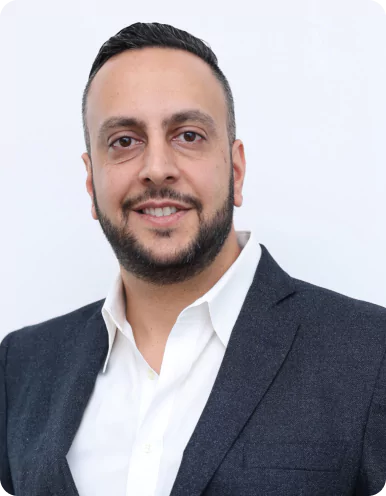
Parham Khorsandi, Esq.
Managing Attorney · California Bar #266658 · Admitted to the United States Tax Court
Parham Khorsandi is the managing attorney of Victory Tax Lawyers, LLP, headquartered at 1100 S. Robertson Boulevard in Los Angeles. His practice focuses on federal and California tax controversy, including Offer in Compromise negotiations before the IRS and FTB, Installment Agreements, Trust Fund Recovery Penalty defense, FTB residency audits on the post-2020 Austin, Phoenix, Boise, and Reno departing-resident pattern, Silicon Valley equity-compensation matters for Intel, AMD, NVIDIA, Applied Materials, Marvell, Ericsson, and Lockheed Martin Sunnyvale employees (RSU vesting and supplemental-withholding gaps, ISO Alternative Minimum Tax exposure on pre-IPO exercises, ESPP discount analysis, IRC §83(b) election protection, IRC §1202 Qualified Small Business Stock exclusion qualification and audit defense across the chip-acquisition pipeline, IRC §409A deferred-compensation analysis, IRC §1061 carried-interest classification), 49ers and visiting-team NFL jock-tax allocation analysis under R&TC §17041 for Levi's Stadium and Super Bowl LIV host-year matters, FBAR and Form 8938 disclosure and Streamlined Filing Compliance Procedure submissions for the Santa Clara H-1B, L-1, Indian-American, Chinese-American, and Vietnamese-American communities, Santa Clara County property-tax assessment appeals before the Santa Clara County Assessment Appeals Board, CDTFA sales-tax representation on the El Camino Real, Stevens Creek Boulevard, Lawrence Expressway, and Mission College Boulevard retail and restaurant corridor and the Levi's Stadium and Santa Clara Convention Center vendor footprint, EDD AB 5 worker-classification audits, OTA appeals, and litigation before the U.S. Tax Court San Francisco and San Jose sessions and the U.S. District Court for the Northern District of California San Jose Division at the Robert F. Peckham Federal Building.
Last Reviewed:
Attorney Advertising. Victory Tax Lawyers, LLP is a California-licensed law firm with its principal office at 1100 S. Robertson Boulevard, Los Angeles, CA 90035. Information on this page is general in nature, may not reflect the most recent legal developments, and does not create an attorney-client relationship. This page is not legal advice. Federal and California tax outcomes depend on individual facts and the discretion of the Internal Revenue Service, the Franchise Tax Board, the California Department of Tax and Fee Administration, the Employment Development Department, the Santa Clara County Treasurer-Tax Collector, the Santa Clara County Assessor, or the relevant tribunal. Past results do not guarantee future outcomes; each tax matter is unique.
IRS Circular 230 Disclosure. To ensure compliance with requirements imposed by the IRS, any U.S. federal tax advice contained on this page is not intended or written to be used, and cannot be used, for the purpose of (i) avoiding penalties under the Internal Revenue Code or (ii) promoting, marketing, or recommending to another party any transaction or matter addressed herein.
California-specific note. VTL attorneys are members of the State Bar of California in active standing. California state-tax matters (FTB, CDTFA, EDD, OTA), Santa Clara County property-tax matters, and federal IRS, U.S. Tax Court, and U.S. District Court Northern District of California San Jose Division matters are handled directly by the firm. Consult a licensed attorney about your specific situation before acting on any content on this page. The State Bar of California Rule of Professional Conduct 7.1 requires that lawyer communications not be false or misleading; this page strives to comply with that rule and does not promise specific outcomes.
Related VTL practice areas
Offer in Compromise
IRC §7122 settlement
Installment Agreement
IRC §6159 payment plan
Tax Lien
IRC §6321 release
Tax Levy
IRC §6331 release
Audit Representation
IRS exam defense
Penalty Abatement
First-Time and reasonable cause
Back Taxes
Unfiled returns and balances
California Tax Attorney
State hub
Santa Clara County
County hub
All areas we serve
Nationwide coverage