Tax Attorney in Sacramento, California
Sacramento is the only city in the United States where the Franchise Tax Board headquarters, the California Department of Tax and Fee Administration headquarters, the Office of Tax Appeals headquarters, and the Employment Development Department headquarters all sit within a few miles of each other — alongside the State Capitol, the California Legislature, the Governor's office, CalPERS, CalSTRS, the Robert T. Matsui U.S. Courthouse, and the U.S. Tax Court's Sacramento trial calendar. We represent Sacramento residents and businesses across every one of those forums — federal IRS, FTB, CDTFA, OTA, EDD, U.S. District Court for the Eastern District of California, and the California Court of Appeal Third District — from our principal office at 1100 S. Robertson Boulevard in Los Angeles.
By Parham Khorsandi, Esq. — California Bar #266658. Admitted to practice before the United States Tax Court. Last Reviewed: .
Request a Free Consultation
100% Free · Confidential · No Obligation
Cal Bar Admitted
Verifiable license #266658
U.S. Tax Court
Sacramento trial sessions
BBB Accredited
A+ rating
5.0 / 72 Reviews
Google Business Profile
Sacramento taxpayers facing IRS, FTB, CDTFA, OTA, or EDD action: the agencies live here, and so do their decision-makers
No other California city looks like Sacramento on a tax-controversy map. The Franchise Tax Board headquarters sits at 9646 Butterfield Way in the Rancho Cordova FTB campus, with a satellite Sacramento Field Office at 3321 Power Inn Road. The California Department of Tax and Fee Administration headquarters sits at 450 N Street, three blocks from the Capitol. The Office of Tax Appeals headquarters — the agency's mothership, with the other hearing rooms in Los Angeles, Fresno, San Diego, and San Francisco — sits at 400 R Street downtown. The Employment Development Department headquarters sits at 800 Capitol Mall, directly across from the State Capitol. On the federal side, the Robert T. Matsui U.S. Courthouse at 501 I Street houses the U.S. District Court for the Eastern District of California and hosts U.S. Tax Court Sacramento trial sessions; the IRS Sacramento Taxpayer Assistance Center sits at 4330 Watt Avenue. A Sacramento resident with a federal balance, a state assessment, a sales-tax determination, an OTA appeal, and an EDD payroll question can walk to four of those buildings in a single afternoon. The pressure points are concentrated, the agency chiefs are local, and the people writing the rules drive the same surface streets you do.
$100M+
Total tax relief secured
2,000+
Tax cases resolved
5.0
Average rating · 72 reviews
CA-Based
LA HQ, serving Sacramento
Past results do not guarantee future outcomes. Each tax case is unique and turns on individual facts and IRS or FTB discretion.
A California-licensed firm representing Sacramento taxpayers in the city where the agencies live
Victory Tax Lawyers, LLP is a California law firm headquartered at 1100 S. Robertson Boulevard in Los Angeles. Both attorneys are California-bar admitted in active standing — Parham Khorsandi, Cal Bar #266658, and Amir Boroumand, Cal Bar #269570 — and both are admitted to practice before the United States Tax Court. Because we are California-admitted, we appear directly before every California tax agency on behalf of Sacramento clients — no out-of-state coordination, no Form 2848 workaround. The four agencies you might face on a single matter are all headquartered in the city: FTB at Rancho Cordova, CDTFA on N Street, OTA on R Street, EDD on Capitol Mall.
Sacramento is the state capital and the seat of Sacramento County. The city covers roughly 100 square miles, holds about 525,000 residents inside the city limits, and anchors a metropolitan area pushing 2.4 million people across Sacramento, Placer, El Dorado, Yolo, Sutter, and Yuba Counties. The neighborhoods that drive distinct tax-controversy patterns are downtown and midtown (state workers, professional services, restaurants, Capitol Mall law and lobbying firms), East Sacramento (older neighborhoods with Prop 13 base-year complications and high concentrations of senior state retirees), Land Park and Curtis Park (long-tenure homeowners, Prop 19 inheritance reassessment exposure), Pocket-Greenhaven (well-off retirees and CalPERS lump-sum issues), Natomas (newer suburb with younger state-employee dual-income households), South Sacramento and Florin (small-business density, restaurants, CDTFA cash-business audits), Tahoe Park and Oak Park (small business plus rental-property tax issues), the Arden-Arcade adjacency (Sutter Health and Kaiser Sacramento medical anchors), and the College-Greenhaven corridor near Sacramento State.
The local tax practice splits into several distinct streams. State-government workforce: the City of Sacramento and the surrounding unincorporated area host most of California's state-government employment, including the cabinet agencies clustered downtown (Resources Agency at 715 P Street, Department of Justice at 1300 I Street, Department of Finance at 915 L Street, CDTFA at 450 N Street, EDD at 800 Capitol Mall, FTB main collection at Rancho Cordova) plus the constitutional offices in the Capitol building and the Office of the Governor at the Capitol. CalPERS at 400 Q Street and CalSTRS in West Sacramento administer the state's two giant defined-benefit plans. State employees and retirees walk in with CalPERS lump-sum distribution problems, CalSTRS Defined Benefit Supplement allocation issues, IRC §414(h)(2) employee pickup contribution basis questions, and the unusual situation that the FTB analyst reviewing a residency case sits two miles from the taxpayer's home. Healthcare: Sutter Health system anchors at the Sutter Medical Center Sacramento on 29th Street, UC Davis Health is a 15-minute drive west in Davis (with major Sacramento spillover for physicians and 1099 staff), and Kaiser Permanente operates Kaiser Sacramento Medical Center on Morse Avenue. Physicians, 1099 medical staff, and faculty-track providers carry equity-compensation back taxes, AMT exposure on incentive-stock-option exercises at affiliated medical-device companies, and the multi-state allocation problems that come with cross-academic-appointment work. Academics: Sacramento State at 6000 J Street and UC Davis 15 miles north feed academic 1099 income, post-doctoral §117(c) scholarship questions, and faculty consulting reclassification under AB 5. Federal: the Robert T. Matsui U.S. Courthouse downtown is the federal venue for the entire Eastern District of California for Sacramento-area civil and criminal-tax matters; U.S. Tax Court designates Sacramento as a place of trial under Rule 140 and calendars sessions there several times per year. Property tax: the Sacramento County Assessor at 3636 American River Drive sets base-year value for every Sacramento parcel and processes Prop 19, Prop 8, and Prop 13 transfer applications. Disputes go to the Sacramento County Assessment Appeals Board under R&TC §1603-1611. Tourism and small business: Old Sacramento, Capitol Mall, and the K Street corridor drive Schedule C 1099 income for guides, food trucks, performers, and event vendors that periodically miss self-employment-tax estimates.
The rest of this page details how federal and California tax law overlap for Sacramento residents and businesses: the agencies, the courthouses, the statutes that matter, the resolution paths that fit the local facts, and the specific pressure points that hit capital-city filers.
Your tax rights as a Sacramento taxpayer
Federal taxpayer rights are codified across the Internal Revenue Code and summarized in IRS Publication 1, the Taxpayer Bill of Rights. California layers its own taxpayer-rights regime through the FTB Taxpayers' Bill of Rights at Cal. Rev. & Tax. Code Part 10.7 plus parallel CDTFA and EDD provisions. The major rights you can invoke in a Sacramento tax matter:
Right to representation (federal)
Under IRC §7521(b)(2), an IRS examiner or collection officer must suspend an interview when you state you wish to consult an authorized representative. A signed Form 2848 puts your tax attorney between you and the IRS for the rest of the matter. The IRS Sacramento Taxpayer Assistance Center at 4330 Watt Avenue honors this at the in-person counter.
Right to representation (California)
FTB Form 3520-PIT (or 3520-BE for entities) appoints a representative with full authority before the Franchise Tax Board. CDTFA Form 392 and EDD DE 48 do the same for sales-tax and payroll matters. Filed authority routes all FTB Rancho Cordova headquarters notices, CDTFA N Street notices, and EDD Capitol Mall notices through counsel.
Right to Collection Due Process
After a Notice of Federal Tax Lien (IRC §6320) or a Final Notice of Intent to Levy (IRC §6330), you have 30 days to request a Collection Due Process hearing on Form 12153. CDP requests pause federal collection enforcement and preserve U.S. Tax Court review.
Right to OTA appeal
Under AB 102 (2018), the California Office of Tax Appeals hears appeals from FTB, CDTFA, and EDD determinations. The appeal window is 30 days from the Notice of Action for FTB matters under R&TC §19324. Sacramento residents have an exceptional venue advantage: OTA headquarters at 400 R Street is in Sacramento itself, and most Sacramento cases are heard there rather than at the LA, Fresno, SF, or SD hearing rooms.
Right to U.S. Tax Court review
A Notice of Deficiency triggers a 90-day petition window under IRC §6213(a). Sacramento petitioners typically designate Sacramento as the place of trial — the Tax Court holds sessions at the Robert T. Matsui U.S. Courthouse at 501 I Street. Calendared sessions run several times per year.
Right to a federal OIC
Under IRC §7122, the IRS may accept less than the full liability where doubt as to collectibility, doubt as to liability, or effective tax administration justifies settlement. Filed on Form 656 with Form 433-A(OIC) or 433-B(OIC).
Right to a California OIC
FTB has compromise authority under Cal. Rev. & Tax. Code §19443. CDTFA operates a parallel offer program under R&TC §6832. EDD compromise authority sits at Cal. Unemp. Ins. Code §1192. The same FTB compromise unit handling Sacramento files sits at 9646 Butterfield Way — the location matters for follow-up cadence.
Right to know the collection statute
IRC §6502 gives the IRS 10 years from assessment to collect. California's parallel period under R&TC §19255 is 20 years — double the federal CSED. Pull both transcripts before negotiating any Sacramento case.
How Victory Tax Lawyers helps Sacramento taxpayers
Federal & California Offer in Compromise
We prepare and file federal Form 656 with Form 433-A(OIC) under IRC §7122, and FTB Form 4905 PIT or BE with the parallel California financial under R&TC §19443. Sacramento OICs that originate inside FTB go through the same compromise unit at 9646 Butterfield Way that handles the rest of the state — the local geography lets us follow up in person when an offer stalls. California is generally tougher on equity in primary residences than the IRS, which matters for East Sacramento, Land Park, and Pocket-Greenhaven home equity.
Installment Agreements (IRS & FTB)
Streamlined IRS IAs under $50,000, Non-Streamlined IAs over $50,000 with Form 433-F disclosure, and Partial Pay Installment Agreements under IRC §6159 that run only through the CSED. FTB monthly-payment plans under FTB Form 3567. Sacramento state employees with a CalPERS pension stream often have predictable disposable-income math that helps with IA negotiation.
Lien release and withdrawal
A federal Notice of Federal Tax Lien under IRC §6321 and an FTB State Tax Lien under Cal. Gov. Code §7170 both attach to Sacramento real and personal property and record at the Sacramento County Clerk-Recorder. We pursue release after payment, certificate of discharge for refinancing or sale, subordination, and lien withdrawal under the Fresh Start program for IAs under $25,000. State employees with security-clearance or fiduciary-position requirements often need the NFTL removed for employment reasons.
Levy release (IRS, FTB, EDD)
Federal wage levies (CP90 / LT11) and bank levies under IRC §6331 stop with CNC, an accepted IA, an accepted OIC, or a CDP request. FTB Earnings Withholding Orders under R&TC §18670 and bank levies under §18670.5 release under analogous resolutions. Sacramento state-employee wages run through the State Controller's Office at 300 Capitol Mall — coordinating release with the SCO payroll cycle prevents a missed paycheck.
Audit and exam defense (5 agencies)
Federal correspondence, office, and field audits. FTB residency audits under R&TC §17014 — especially common when a state retiree moves from East Sacramento or Pocket to Reno, Las Vegas, Boise, or Bend. CDTFA sales-tax audits on Sacramento restaurants, dispensaries, and convenience stores out of the agency's own headquarters on N Street. EDD AB 5 audits on state-agency-adjacent consulting firms and Capitol-corridor professional-services operations, run out of the EDD HQ at 800 Capitol Mall. OTA appeals at 400 R Street downtown.
Penalty abatement
Federal First-Time Penalty Abatement and reasonable-cause requests under IRC §6651. FTB penalty waivers under R&TC §19131 (failure to file) and §19132 (failure to pay), and CDTFA waivers under §6592. Reasonable-cause for Sacramento filers affected by the 2017 Oroville Dam spillway crisis evacuation, 2021 Caldor Fire smoke impacting the Highway 50 corridor, and the 2023 atmospheric-river flooding along the Sacramento and American Rivers.
12 types of Sacramento tax issues we handle
Federal and California state practice areas, framed for the matters that walk in the door from East Sacramento, Land Park, Pocket-Greenhaven, Curtis Park, Natomas, downtown and midtown, Tahoe Park, Oak Park, South Sacramento, and the Arden-Arcade adjacency.
CalPERS pension distribution tax
Lump-sum-versus-annuity elections at retirement, 20 percent federal mandatory withholding on eligible rollover distributions under IRC §3405, Required Minimum Distributions under IRC §401(a)(9), and 50 percent excise penalty exposure for missed RMDs under IRC §4974 (reduced to 25 percent or 10 percent under SECURE 2.0). Sacramento retirees in East Sacramento, Land Park, Pocket-Greenhaven, and Curtis Park live with this profile across long retirements.
State-employee IRC §414(h)(2) basis
California state employees make CalPERS or CalSTRS contributions on a federal pre-tax basis under IRC §414(h)(2) employee pickup — but those same dollars are taxed currently by California. The result is a basis differential: federally pre-tax, state post-tax. Many Sacramento retirees discover years into retirement that no one tracked their California basis, leading to over-withholding on state returns and unclaimed basis recovery.
State-agency 1099 reclassification
Consultants billing CalHHS, CDPH, CDSS, DGS, CHHS-Agency departments, CalSavers, and the California State University system as 1099 independent contractors face reclassification under the AB 5 ABC test at Cal. Lab. Code §2775. EDD audits run out of the agency's headquarters at 800 Capitol Mall — the same building the consultant might be invoicing.
FTB residency audits (Sacramento-departing)
The nine-factor domicile test under R&TC §17014 and FTB Pub. 1031, applied through the framework set by Appeal of Stephen Bragg (2003-SBE-002) and Appeal of Bindley (2018). Common after Sacramento moves to Reno-Sparks (the single largest departing destination via the Truckee-Reno corridor on I-80), Las Vegas, Boise, Coeur d'Alene, and Bend. CalPERS distribution streams continue to be federally taxable but are protected from California taxation post-move by 4 USC §114 — documentation of the move and severed connections matters.
Trust Fund Recovery Penalty
Under IRC §6672, the IRS pierces the corporate veil for unpaid payroll trust funds. Sacramento midtown restaurants, K Street bars, R Street creative-corridor businesses, South Sacramento and Florin small businesses, and Old Sacramento tourism operators that fell behind on Form 941 deposits often discover this through Form 4180 interviews. EDD parallel exposure runs under Cal. Unemp. Ins. Code §1735, with the interviewer based at 800 Capitol Mall.
EDD AB 5 worker-classification
Sacramento marketing, PR, lobbying, and government-affairs firms (many serving state-agency clients within walking distance), Capitol Mall consultancies, Old Sacramento and midtown event-production operators, and creative agencies in the R Street and Warehouse Artist Lofts corridor reclassified from 1099 to W-2 under Cal. Lab. Code §2775. Three years of back UI, ETT, SDI, and PIT withholding plus penalties.
CDTFA cash-business audits
Sacramento midtown restaurants, food trucks along R Street and at Capitol Mall, dispensaries operating under Sacramento city's cannabis-business permit program, K Street bars, and convenience stores throughout South Sacramento, Oak Park, and Tahoe Park draw CDTFA mark-up audits using observation tests and POS reconciliation. The CDTFA auditor works out of the agency's headquarters at 450 N Street.
CDTFA cannabis-industry tax
Sacramento operates one of California's larger municipal cannabis-business permit programs. CDTFA cannabis-excise tax under R&TC §34011 and cultivation tax (sunsetted 2022 but residual audits ongoing), federal IRC §280E deduction disallowance, and the cash-handling reality of cannabis sales generate a distinct audit profile. CDTFA cannabis-team auditors sit at the N Street headquarters.
Wage and bank levies
IRS CP90 / LT11 levies, FTB Earnings Withholding Orders for Taxes (EWOT) under R&TC §18670, CDTFA collector levies, and EDD wage garnishments. State-employee wages run through the State Controller's Office at 300 Capitol Mall; coordinating with SCO payroll cycles is part of any release on a CalHR-paid W-2.
Property tax: Prop 13, Prop 19, Prop 8
Sacramento has unusually long-tenure homeownership in East Sacramento, Land Park, Curtis Park, the Fab 40s, Boulevard Park, and Sierra Oaks — meaning Prop 13 base-year values from the 1970s and 1980s create high stakes on Prop 19 parent-to-child reassessment at inheritance. The Sacramento County Assessor at 3636 American River Drive handles Prop 13 base-year transfers, Prop 19 exclusions limited to primary residence, and Prop 8 decline-in-value applications. Appeals go to the Sacramento County Assessment Appeals Board under R&TC §1603-1611 within 60 days of the Annual Notice or by September 15 of the assessment year.
Passport revocation defense
IRC §7345 certifications to the State Department for seriously delinquent federal tax debt. We work to decertify before travel for Sacramento state-agency contractors with international consulting work, UC Davis-affiliated faculty with cross-border research, Sutter Health and Kaiser physician staff with international family travel, and Capitol-corridor lobbying-firm partners with regular international family visits.
Sutter Health / Kaiser / UC Davis 1099 physician
Sutter Medical Center Sacramento, Kaiser Permanente Sacramento Medical Center, and UC Davis Health (15 miles west in Davis with major Sacramento spillover) employ and contract with thousands of physicians, nurse practitioners, and specialists. 1099 medical staffing, locum tenens income, faculty-versus-clinical allocation, IRC §55 AMT exposure from incentive-stock-option exercises at affiliated medical-device companies, and multi-state allocation across academic-affiliated appointments all generate tax-controversy work for Sacramento medical-corridor residents in Arden-Arcade, North Sacramento, and East Sacramento.
Nine common causes of tax debt in Sacramento
1. CalPERS lump-sum retirement elections
A Sacramento state retiree elects a partial lump-sum distribution at separation, the plan withholds 20 percent federal mandatory under IRC §3405, and the retiree learns at April filing that California layers an additional 10.3 to 13.3 percent on the same dollar. Underpayment penalties under IRC §6654 compound from there.
2. State-employee outside consulting
A state employee picks up consulting work after hours — often legislative analysis, policy writing, or grant-funded research — without quarterly estimates. The 1099 income hits the W-2 baseline at the top California marginal rate, federal SE tax adds 15.3 percent on net earnings, and the April balance arrives with no withholding to cover it. Form 2210 underpayment penalties stack.
3. Lobbying and government-affairs partner draws
Capitol Mall lobbying firms, government-affairs LLPs, and the policy-consulting partnerships clustered between L Street and J Street pay partners on K-1 draws. Quarterly estimates often lag legislative-cycle income spikes (final-month committee work, end-of-session bill drafting). The April balance routinely runs six figures for senior partners at top-tier Capitol-corridor firms.
4. Departing-resident FTB audits
High earners and state retirees who moved from East Sacramento, Land Park, Pocket-Greenhaven, Curtis Park, or Sierra Oaks to Nevada (especially the Truckee-Reno corridor), Idaho, Arizona, or Texas routinely trip the FTB nine-factor domicile test. The FTB asserts continued California domicile for one to three additional tax years, generating substantial state-tax assessments after the move.
5. CalPERS DRO division at divorce
A Sacramento divorce divides CalPERS service credit through a Domestic Relations Order. The non-member spouse later draws a distribution, taxed individually, and the original member spouse continues to receive their share. Federal and California tax treatment of separate-interest versus shared-payment DROs creates surprise balances if not modeled correctly at the time of separation. The family law venue is the William R. Ridgeway Family Relations Courthouse at 3341 Power Inn Road.
6. ERC clawback exposure
Employee Retention Credit claims submitted by promoter mills are being clawed back through CP207/CP207L letters. Sacramento hospitality groups (midtown restaurants, K Street bars, Old Sacramento operators), Capitol-corridor professional-services firms, midtown medical practices, and South Sacramento small businesses are inside the audit wave.
7. Small-business payroll lapses
A midtown restaurant, South Sacramento auto shop, K Street bar, Old Sacramento tourism operator, or Florin convenience store stops depositing 941 trust funds during a slow quarter. The IRS asserts TFRP against the owner personally under IRC §6672, and EDD assesses parallel state payroll under Cal. Unemp. Ins. Code §1735 out of the EDD HQ on Capitol Mall.
8. Crypto trading without records
Sacramento has its tech-adjacent population (Intel Folsom commuters, state-agency IT staff, Sacramento State and UC Davis graduates) holding significant crypto exposure. Exchanges issued 1099-K and 1099-MISC reports; the IRS matches them to filed returns and issues CP2000 notices for the gap. FTB pursues the parallel California assessment using the federal data.
9. Disaster-disrupted filing
Filers affected by the 2017 Oroville Dam spillway evacuation order (downstream Sacramento), 2021 Caldor Fire smoke and Highway 50 evacuation impact, and the 2023 atmospheric-river flooding along the Sacramento and American Rivers (including the Pocket-Greenhaven, Natomas, and South Sacramento levee-protected lowlands) missed deadlines. Disaster-zone extensions help, but penalty stacks accumulate fast when the disaster window lapses.
Who is on the hook: eight Sacramento tax-liability scenarios
Joint filers (community-property state)
California is a community-property state under Cal. Fam. Code §760. Joint federal returns create joint-and-several liability under IRC §6013(d)(3). One spouse can be pursued for the entire balance — even after divorce — subject to Innocent Spouse Relief under IRC §6015 and R&TC §18533. Especially relevant in Sacramento two-state-employee households where one spouse's withholding masks the other's underwithheld outside income.
Partnership general partners
Under IRC §6231 and the BBA centralized partnership audit regime, general partners of Capitol-Mall lobbying firms, government-affairs LLPs, Sacramento-area real-estate partnerships, and downtown professional-services partnerships face imputed underpayment liability for partnership-level adjustments. Push-out elections under IRC §6226 shift the burden to the partners' year of audit.
Responsible persons for payroll
Trust Fund Recovery Penalty under IRC §6672 reaches anyone with check-signing authority who willfully failed to pay over withheld taxes. State parallel sits at Cal. Unemp. Ins. Code §1735 for EDD payroll. Reaches Sacramento midtown, Old Sacramento, South Sacramento, and Florin small-business owners after the entity folds.
CDTFA dual-determinations
CDTFA — from its own headquarters at 450 N Street — issues dual-determination notices personally against corporate officers, directors, and LLC members of entities that fail to remit sales tax in trust, under R&TC §6829. Common against Sacramento restaurant operators, K Street bar entities, midtown dispensaries, and Old Sacramento retail operators after the business closes.
FTB suspended-entity personal exposure
An entity that fails to pay California minimum franchise tax or file a Statement of Information is suspended by FTB under R&TC §23301. While suspended, the entity loses its right to contract, sue, or defend in California courts — including the Sacramento County Superior Court at the Gordon D. Schaber Courthouse on 9th Street. Officers signing on behalf during suspension can incur personal exposure.
Transferee liability
IRC §6901 reaches a transferee of assets where the transfer rendered the transferor insolvent and tax debts remain unpaid. Sacramento family-LLC restructurings, Prop 19 parent-to-child transfers under Cal. Const. Art. XIII A on East Sacramento and Land Park primary residences, and intra-family trust funding moves can trigger this analysis.
Successor business liability
Asset purchases of a Sacramento midtown restaurant, K Street bar, Old Sacramento tourism operator, dispensary, or auto-dealership can carry forward CDTFA sales-tax successor liability under R&TC §6811-6814 and EDD payroll successor liability under Cal. Unemp. Ins. Code §1731. Clearance letters from CDTFA on N Street and EDD on Capitol Mall before close are the buyer's protection.
Estate and decedent returns
California has no state estate tax; the decedent's final 1040 and the estate's 1041 are the executor's responsibility. Personal liability for the executor attaches under 31 USC §3713(b) if distributions are made before federal tax claims are satisfied. Probate of Sacramento estates — including the high CalPERS-survivor-annuity values common in the city — moves through the Sacramento County Superior Court Probate Division at the William R. Ridgeway Family Relations Courthouse.
What resolution can look like in Sacramento
Debt reduced
An accepted federal OIC settles the IRS liability for less than the full amount. A parallel FTB §19443 compromise settles the California side, processed by the compromise unit at FTB headquarters on Butterfield Way. Partial Pay IAs cap recovery at what you can pay through the federal CSED or the FTB 20-year statute. Currently Not Collectible status freezes federal collection while finances stabilize.
Penalties abated
Federal First-Time Penalty Abatement removes failure-to-file and failure-to-pay penalties for a clean compliance year. Reasonable-cause requests address 2017 Oroville Dam spillway evacuation, 2021 Caldor Fire smoke and evacuation periods, 2023 atmospheric-river flooding along the Sacramento and American Rivers, serious illness, and preparer reliance. FTB waivers under §19131 and §19132 follow parallel principles.
Liens and levies released
A federal NFTL withdraws once a streamlined IA is in place under Fresh Start. FTB State Tax Liens release on payment, accepted compromise, or release-for-cause — critical when refinancing or selling Sacramento real property in East Sacramento, Land Park, or Pocket-Greenhaven. Wage and bank levies stop when the account moves to CNC, IA, or OIC processing. State-employee wages levied through the State Controller's Office on Capitol Mall stop within one payroll cycle of release. Passport certifications reverse once federal debt drops below the §7345 threshold.
Outcomes vary. Past results do not guarantee future outcomes. Each tax case is unique.
Settlement ranges from the firm's case files
The following ranges come from Victory Tax Lawyers cases over the past several years and contribute to the firm's $100M+ aggregate tax-relief figure. Names and identifying facts are removed for confidentiality.
| Matter type | Original liability | Resolution | Approximate result |
|---|---|---|---|
| Installment Agreement | $138,296 | IRC §6159 streamlined IA | $25/month accepted |
| Partial Pay IA | $126,489 | IRC §6159 PPIA through CSED | $50/month accepted |
| Installment Agreement | $128,206 | IRC §6159 streamlined IA | $25/month accepted |
| Partial Pay IA | $116,451 | IRC §6159 PPIA through CSED | $50/month accepted |
| Installment Agreement | $152,296 | IRC §6159 streamlined IA | $25/month accepted |
Past results do not guarantee future outcomes. Each tax case is unique and turns on facts, asset position, monthly disposable income, IRS Allowable Living Expense tables, FTB equivalent standards, and the discretion of the assigned Revenue Officer, Settlement Officer, or FTB compromise reviewer. Acceptance rates for federal Offer in Compromise vary widely — the IRS reported a nationwide acceptance rate of roughly 30 to 40 percent in recent years.
Why work with a California-licensed firm on a Sacramento tax matter
Sacramento residents face a tax-controversy environment with no peer in the country. No other American city contains the headquarters of all four of its state's primary tax agencies. The FTB collection officer who calls about your residency assessment lives in Folsom or Elk Grove and works out of 9646 Butterfield Way in Rancho Cordova. The CDTFA auditor reviewing your dispensary's POS data drives in from Natomas to 450 N Street. The OTA administrative law judge hearing your appeal sits at 400 R Street, three blocks from the Capitol. The EDD auditor running your AB 5 reclassification works out of 800 Capitol Mall, possibly in the same building your firm is invoicing. The IRS Revenue Officer handling your federal collection file works out of 4330 Watt Avenue. The U.S. Tax Court judge hearing your deficiency case sits at the Matsui Courthouse on I Street. Sacramento tax matters do not stay in their lanes; the agencies know each other, the case-load patterns overlap, and the federal-state interaction is denser here than anywhere else in California.
Victory Tax Lawyers is California-admitted, headquartered in Los Angeles, and built around exactly this overlap. Parham Khorsandi (Cal Bar #266658) and Amir Boroumand (Cal Bar #269570) appear directly before the FTB, CDTFA, EDD, and the California Office of Tax Appeals, and on the federal side before the IRS and the U.S. Tax Court. No out-of-state coordination, no Form 2848 workaround. The same attorneys handle the whole engagement from initial Form 12153 through final Tax Court trial in Sacramento.
California is one of the most lawyer-intensive tax environments in the country, and Sacramento is its administrative heart. The State Bar's Rule of Professional Conduct 7.1 (formerly Rule 1-400) tightly governs lawyer advertising in the state — no superlatives without verifiable substantiation, no specific dollar guarantees, no testimonials without disclaimers. The firm operates under those rules natively, which is why this page does not promise outcomes, does not promote dollar averages without context, and does not list testimonials without proper disclosure.
Sacramento is also unusual for the state-workforce density driving the practice mix. The CalPERS distribution-tax, CalSTRS supplemental-benefit, IRC §414(h)(2) employee pickup basis, state-agency 1099 reclassification under AB 5, Sutter / Kaiser / UC Davis Health physician-faculty equity, and Capitol-corridor lobbying-partnership matters that show up here are not the same matters that walk in the door in San Diego or Orange County. That practice density shapes how we approach a Sacramento engagement.
The seven steps of a VTL tax-resolution engagement
Free consultation
A 30-minute call with an attorney to outline the facts, the IRS or FTB notices received, and the realistic resolution options for a Sacramento matter.
Engagement letter
A written attorney-client agreement defines scope, fee, and authority. California-bar privilege and federal common-law attorney-client privilege both attach.
Federal & state PoA
Form 2848 filed with the IRS, FTB Form 3520, CDTFA Form 392, or EDD DE 48 filed with the relevant California agency. All notices route to counsel.
Transcript investigation
IRS Account Transcripts, Wage-and-Income Transcripts, and Record of Account pulled across all open years. FTB MyFTB account, CDTFA records, and EDD records pulled. Federal CSED and California 20-year statute dates verified.
Strategy memo
A written analysis recommending federal OIC, IA, CNC, audit response, CDP, or Tax Court petition — with the FTB, CDTFA, OTA, or EDD parallel strategy where applicable.
Resolution filed
Federal Forms 656, 433-A, 9423, 12153, or Tax Court Petition. State FTB Form 4905, CDTFA offer, or EDD compromise. Negotiations with Revenue Officers, Settlement Officers, Appeals Officers, FTB analysts, CDTFA supervisors, and OTA hearings handled directly.
Compliance close-out
Post-resolution monitoring: quarterly estimates, return filings, and protection against IA default on either side. The case is done when the new pattern is stable, not when the offer is accepted.
Collection statute warning — the California 20-year tail
Under IRC §6502(a), the IRS generally has ten years from the date of assessment to collect a tax. After the federal Collection Statute Expiration Date, the debt becomes uncollectible by operation of law. Tolling events that extend the federal CSED include a pending Offer in Compromise (extends by OIC pendency plus 30 days), bankruptcy filing (extends by bankruptcy stay plus six months), Collection Due Process hearings (extends while pending), Innocent Spouse claims, and continuous absence from the United States for six months or more.
The California side is the opposite of forgiving. Under R&TC §19255, the FTB has 20 years from the latest of the assessment, the date the liability becomes due and payable, or the date a final return was filed, to collect. That is double the federal CSED. CDTFA collection statutes for sales-and-use tax are governed by R&TC §6711, generally 10 years from determination but with similar tolling. EDD has its own collection window under Cal. Unemp. Ins. Code §1701.
The practical impact for a Sacramento filer: a federal balance assessed in 2016 may be approaching CSED expiration in 2026, while the FTB equivalent remains collectible until 2036 — administered from headquarters eight miles east of the State Capitol. Submitting a federal OIC restarts the federal clock. Sometimes a Partial Pay IA that runs out the federal statute is the better federal play, paired with a separate FTB compromise to address the longer state tail. The two strategies are decided together, not in isolation.
Sacramento venue: every tax-agency headquarters in the city limits
Sacramento is the only city in the United States where all four of California's primary tax-administration agencies are headquartered within a few miles of each other — alongside the State Capitol, the federal Eastern District courthouse, and the U.S. Tax Court's Sacramento trial calendar. The geography of a Sacramento tax matter:
U.S. Tax Court — Sacramento trial sessions
The U.S. Tax Court designates Sacramento as a place of trial under Tax Court Rule 140. Sessions are held at the Robert T. Matsui U.S. Courthouse at 501 I Street, Sacramento 95814. Sacramento residents typically designate Sacramento on the deficiency petition; sessions are calendared several times per year.
IRS Taxpayer Assistance Center — Sacramento
The IRS Sacramento Taxpayer Assistance Center is at 4330 Watt Avenue, Sacramento 95821. Appointments are required and arranged through apps.irs.gov/app/office-locator or 844-545-5640. The TAC handles in-person account inquiries, payment intake, identity verification, and ITIN applications.
FTB headquarters — Rancho Cordova campus
The California Franchise Tax Board headquarters at 9646 Butterfield Way, Rancho Cordova 95827 administers personal-income-tax audits, residency examinations under R&TC §17014, corporate franchise-tax matters under Part 11, and the §19443 compromise unit. A Sacramento Field Office at 3321 Power Inn Road serves walk-in matters. Sacramento residents have FTB enforcement administered from within their own metropolitan area — a unique posture in California.
CDTFA headquarters — 450 N Street
The California Department of Tax and Fee Administration headquarters sits at 450 N Street, Sacramento 95814, three blocks from the Capitol. CDTFA administers sales-and-use tax, cannabis-excise tax under R&TC §34011, fuel taxes, lumber-products assessment, and dozens of other special taxes. Sacramento dispensaries, restaurants, K Street bars, and convenience-store audits route through this building.
Office of Tax Appeals — 400 R Street
The California Office of Tax Appeals headquarters sits at 400 R Street, Sacramento 95811. OTA was created in 2018 under AB 102 to hear appeals from FTB, CDTFA, and EDD determinations. Other hearing locations exist in Los Angeles, Fresno, San Diego, and San Francisco — but Sacramento is the agency's home. Three-judge panels of Administrative Law Judges; decisions are precedential and published.
EDD headquarters — 800 Capitol Mall
The California Employment Development Department headquarters sits at 800 Capitol Mall, Sacramento 95814, directly across from the State Capitol. EDD administers payroll tax (UI, ETT, SDI, PIT withholding under Cal. Unemp. Ins. Code), AB 5 worker-classification audits, and the §1192 compromise program. The same building is across the street from the State Capitol — the agency that audits a Sacramento consulting firm's contractor classification sits next door to the legislators who wrote AB 5.
Sacramento County Department of Finance & Assessor
The Sacramento County Department of Finance, Tax Collection & Business Licensing at 700 H Street, Room 1710, handles Sacramento property-tax billing and defaulted-property auctions. The Sacramento County Assessor at 3636 American River Drive, Suite 200 sets Prop 13 base-year value for every Sacramento parcel and processes Prop 19, Prop 8, and Prop 13 transfer applications. Appeals go to the Sacramento County Assessment Appeals Board under R&TC §1603-1611.
Sacramento County Superior Court
The Sacramento County Superior Court's main civil venue is the Gordon D. Schaber Sacramento County Courthouse at 720 9th Street, Sacramento 95814. The court handles state-tax civil actions, FTB and CDTFA collection litigation, judicial review of OTA decisions, probate proceedings with tax components, and divorce matters involving community-property tax allocation and CalPERS DRO division. The William R. Ridgeway Family Relations Courthouse handles family law; the Lorenzo E. Patino Hall of Justice handles criminal matters.
U.S. District Court — Eastern District of California
Sacramento sits in the U.S. District Court for the Eastern District of California, Sacramento Division. Federal refund suits under 28 USC §1346 and criminal-tax cases involving Sacramento defendants proceed at the Robert T. Matsui U.S. Courthouse at 501 I Street — the same building that houses Tax Court sessions. Appellate review goes to the U.S. Court of Appeals for the Ninth Circuit in San Francisco.
California Court of Appeal — Third District
Sacramento sits in the Third Appellate District of the California Court of Appeal, located at 914 Capitol Mall, Sacramento 95814. State-tax civil appeals from Sacramento County Superior Court — including judicial review of OTA decisions under R&TC §19382 / §19385 refund-suit framework — proceed here. Onward review goes to the California Supreme Court in San Francisco.
VTL represents clients across every Sacramento neighborhood — East Sacramento, Land Park, Curtis Park, the Fab 40s, Boulevard Park, Pocket-Greenhaven, Natomas (North and South), Tahoe Park, Oak Park, Sierra Oaks, College-Greenhaven, South Sacramento, Florin, Meadowview, Valley Hi, Parkway, Hollywood Park, Midtown, downtown, Old Sacramento, Mansion Flats, R Street Corridor, the Warehouse Artist Lofts district, North Sacramento, Del Paso Heights, Hagginwood, and the Arden-Arcade adjacency.
Request a free consultation with a Sacramento tax attorney
A 30-minute call with an attorney costs nothing. Bring your most recent IRS notice, your last filed federal and California returns, your CalPERS or CalSTRS distribution paperwork if applicable, and any FTB, CDTFA, OTA, EDD, or Sacramento County correspondence. We will tell you which resolution options actually fit your facts — across the federal IRS plus all four California agencies headquartered in Sacramento — before you sign anything.
Office: 1100 S. Robertson Boulevard, Los Angeles, CA 90035. Serving Sacramento by phone, secure portal, and in-person by appointment at the federal courthouse, FTB headquarters, CDTFA headquarters, OTA hearings, or EDD headquarters as the matter requires.
Frequently asked questions for Sacramento taxpayers
Reviewed by
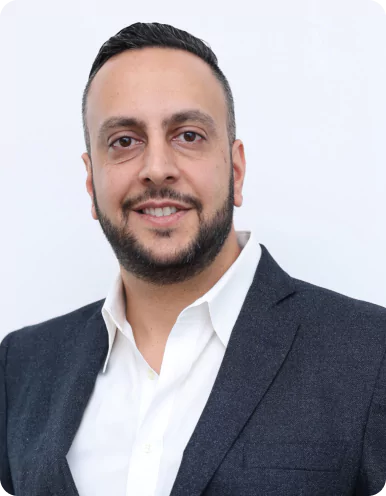
Parham Khorsandi, Esq.
Managing Attorney · California Bar #266658 · Admitted to the United States Tax Court
Parham Khorsandi is the managing attorney of Victory Tax Lawyers, LLP, headquartered at 1100 S. Robertson Boulevard in Los Angeles. His practice focuses on federal and California tax controversy, including Offer in Compromise negotiations before the IRS and FTB, Installment Agreements, Trust Fund Recovery Penalty defense, FTB residency audits, CalPERS and CalSTRS distribution-tax matters, state-agency 1099 reclassification under AB 5, CDTFA sales-tax representation, EDD worker-classification audits, OTA appeals, and litigation before the U.S. Tax Court Sacramento sessions. He has represented Sacramento individuals and businesses across East Sacramento, Land Park, Curtis Park, Pocket-Greenhaven, Natomas, midtown, downtown, South Sacramento, Florin, Tahoe Park, Oak Park, and the Arden-Arcade adjacency.
Last Reviewed:
Attorney Advertising. Victory Tax Lawyers, LLP is a California-licensed law firm with its principal office at 1100 S. Robertson Boulevard, Los Angeles, CA 90035. Information on this page is general in nature, may not reflect the most recent legal developments, and does not create an attorney-client relationship. This page is not legal advice. Federal and California tax outcomes depend on individual facts and the discretion of the Internal Revenue Service, the Franchise Tax Board, the California Department of Tax and Fee Administration, the Office of Tax Appeals, the Employment Development Department, the Sacramento County Department of Finance, the Sacramento County Assessor, or the relevant tribunal. Past results do not guarantee future outcomes; each tax matter is unique.
IRS Circular 230 Disclosure. To ensure compliance with requirements imposed by the IRS, any U.S. federal tax advice contained on this page is not intended or written to be used, and cannot be used, for the purpose of (i) avoiding penalties under the Internal Revenue Code or (ii) promoting, marketing, or recommending to another party any transaction or matter addressed herein.
California-specific note. VTL attorneys are members of the State Bar of California in active standing. California state-tax matters (FTB, CDTFA, EDD, OTA), Sacramento County property-tax matters, and federal IRS / U.S. Tax Court matters are handled directly by the firm. Consult a licensed attorney about your specific situation before acting on any content on this page. The State Bar of California Rule of Professional Conduct 7.1 requires that lawyer communications not be false or misleading; this page strives to comply with that rule and does not promise specific outcomes.
Related VTL practice areas
Offer in Compromise
IRC §7122 settlement
Installment Agreement
IRC §6159 payment plan
Tax Lien
IRC §6321 release
Tax Levy
IRC §6331 release
Audit Representation
IRS exam defense
Penalty Abatement
First-Time and reasonable cause
Back Taxes
Unfiled returns and balances
California Tax Attorney
State hub
Sacramento County
County hub
Elk Grove
Nearby city
Folsom
Nearby city
Davis
Nearby city
Roseville
Nearby city
All areas we serve
Nationwide coverage