
If you don’t have receipts for taxes, you may still be able to claim deductions if you can support them with other credible records, as permitted under the Internal Revenue Service rules. Certain expenses, including some business meal expenses where you can deduct half of the cost, may be substituted with alternative documentation if it shows the amount and business purpose. However, unsupported deductions may be denied during an audit, potentially resulting in additional taxes, penalties, and interest. Missing receipts can also increase the likelihood of future audits, making it important to reconstruct your records as thoroughly as possible.
At Victory Tax Lawyers, we help taxpayers nationwide resolve IRS disputes and tax debt matters. Our attorneys bring more than 10 years of experience handling tax controversy, resolution, and litigation matters, have secured over $100 million in tax relief for clients, and have assisted more than 10,000 taxpayers across all 50 states. Our results include reducing a $1 million tax liability to $16,194 through an Offer in Compromise and converting six-figure tax debts into affordable monthly payment plans as low as $25 per month. If you are facing IRS issues, contact us today for a free consultation.
This guide explains what to do when you don’t have tax receipts and is designed for individuals, self-employed taxpayers, and small business owners who need clarity on protecting their tax claims.
Are Receipts Necessary for All Tax Deductions?

No, receipts are not required for every tax deduction, but you must have enough documentation to prove the expense is legitimate. The IRS requires adequate records showing the amount, date, place, and purpose of an expense. While receipts are the strongest evidence, the IRS may accept alternative documentation for certain deductions, such as bank or credit card statements, canceled checks, invoices, or mileage logs.
For example, self-employed health insurance premiums can often be deducted without traditional receipts if other reliable records support the claim. In our experience, some deductions have stricter documentation requirements than others. Charitable donations, business travel, medical expenses, and business asset purchases all have specific substantiation rules, and charitable contributions over $250 generally require written acknowledgment from the organization.
According to IRS Data Book statistics, the IRS examined roughly 0.4% of individual income tax returns in recent fiscal years, although audit rates are significantly higher for certain high-income taxpayers and businesses reporting substantial Schedule C activity. The IRS also reports receiving more than 160 million individual tax returns annually, making documentation essential when questions arise about deductions or credits.
If you cannot support a deduction during an IRS audit, the IRS may disallow it, which can increase your tax bill. Missing receipts also shift the burden of proof to you and may result in penalties and interest if the IRS determines you owe additional tax. Since the IRS can generally audit returns for three to seven years, keeping organized records is the best way to protect your deductions. If you disagree with the audit results, you generally have the right to appeal the IRS’s findings within 30 days.
The plain fact is, not every tax deduction requires a receipt. However, having proper documentation is necessary at all times to help you avoid tax audits and other possible complications that arise when the IRS isn't completely satisfied with your records.
Our Recover-Prove-Protect Method for Missing Tax Records
When clients contact our firm after losing receipts, we generally follow a three-step process that helps organize the strongest possible response before communicating with the IRS.
- Recover - Locate duplicate records from banks, vendors, online accounts, accounting software, and email confirmations.
- Prove - Match every expense with supporting evidence showing the amount, date, business purpose, and connection to income-producing activities while identifying which deductions qualify under the Cohan Rule and which require strict substantiation under IRC §274(d).
- Protect - Present the documentation in a logical format, respond to IRS requests strategically, and implement a recordkeeping system that reduces future audit risk.
In our experience, approaching missing documentation methodically is far more effective than submitting stacks of unorganized paperwork.
What Tax Deductions Can You Claim Without Receipts?

There are exceptions where you may be able to claim deductions even though you're without receipts to substantiate your claims. Such exceptions include:
1. Deductions under $75
In cases where your expenses are minimal, perhaps below $75, the IRS may permit you to claim your tax deductions without receipts. Think of small incidentals like meals, parking, or minor supplies. In such cases, the record of such an expense would suffice.
2. Standard mileage rate rules
Another instance when you are not necessarily required to keep receipts for individual expenses, such as gas, maintenance, and repairs, is when you're claiming the standard mileage rate for your vehicle expenses. You don't need receipts for gas, maintenance, or repairs. However, you must keep a mileage record showing the business purpose, dates, and miles driven.
Another thing to remember is that when using the vehicle for personal reasons as well, you can only claim tax deductions for the portion of miles driven for business purposes, so ensure you're pretty clear about that in your logbook.
3. Employer reimbursements
If your employer reimburses you for business expenses (and you're not claiming them on your tax return), you do not need receipts. However, it's wise to keep a detailed record of these expenses, including a computer log, a spreadsheet, or a diary for your own reference. The record must also show the reason for the payment, the payment amount, the business name and address, the name of the vendor, and the date of the payment.
4. Self-Employed Taxes
If you're operating as a self-employed individual, you're responsible for self-employment taxes, including employer and employee contributions to Social Security and Medicare. Note that the self-employed tax rate is 15.3% of your gross income. However, you can deduct your portion of this tax (50%) from your adjusted gross income, which requires no receipts at all.
5. Charitable Gifts Under $250
Cash donations under $250 to a qualified charitable organization are one of the few charitable donations that one can take without a receipt. However, the IRS requires proof of charitable contributions to claim a donation as a tax deduction. This proof can be in the form of a bank record (credit card statement, bank statement, or canceled check) or a payroll deduction. Acknowledgement letters may also suffice. For donations over $250, written acknowledgment from the charity is needed as well.
6. Standard Deductions
You don't need receipts to claim standard deductions such as mortgage interest, student loan interest, medical expenses, HSA contributions, or IRA contributions. However, for itemized deductions, receipts are crucial for things like medical expenses, charitable contributions, or property taxes.
What Are the Alternative Proof Methods When You Do Not Have Tax Receipts?
Paper receipts are the cleanest proof of an expense. They are not the only proof. When individual receipts are missing, the IRS will often weigh other records that show what you spent, when, and why. Start with your financial trail. A bank statement, a credit card statement, and canceled checks each show the vendor, the date, and the amount. In our experience, invoices and paid bills provide the details. Together these documents reconstruct much of what a receipt would have shown.
For a business, they also help separate business income and business costs from personal expenses. Some records prove the purpose of an expense rather than the amount. Calendar entries can validate a business meeting behind a meal or a trip. Emails, signed contracts, and appointment logs place you with a client or vendor on a given date. Mileage logs document business driving. Even cell phone records can corroborate a call that lines up with a claimed expense.
This is what tax professionals mean by alternative documentation. This idea comes from Cohan v. Commissioner, a 1930 decision from the Second Circuit involving the Broadway performer George M. Cohan. The court held that when the evidence shows a taxpayer clearly incurred a deductible cost, but the exact figure is not provable, the amount may be estimated on a reasonable basis rather than denied outright. However, you still need a credible evidentiary foundation for the number you claim.
The Cohan Rule also has a hard limit that trips up many taxpayers. It does not apply to expenses governed by Internal Revenue Code section 274(d). That section covers travel, meals, business gifts, and listed property, which includes vehicles. Those categories demand strict substantiation of the amount, time, place, and business purpose.
For section 274(d) expenses, no estimate substitutes for the record, no matter how reasonable it sounds. The absence of the record is generally a complete bar to the deduction. So the practical approach has two parts. Assemble every financial and contextual record you can find. Then be honest about which expenses can be reasonably estimated and which cannot. Inflated or invented figures do not survive review, and they raise the risk of penalties.
What Is the IRS Audit Process When Receipts Are Missing?

In our experience, an audit usually begins with an audit letter. The IRS mails a notice that identifies the tax year under review and the items in question. The letter typically includes an information document request, which lists the records the IRS wants to see.
An IRS auditor, sometimes called an IRS agent or examiner, then reviews what you provide. When receipts are gone, the examiner looks at your alternative documentation. Bank statements, credit card statements, logs, and contracts all come into play. The examiner also weighs your credibility. Records that line up cleanly with each other carry more weight than a story with gaps.
The outcome is summarized in an IRS audit report. If the examiner accepts your proof, the deduction stands. If the examiner disallows an expense, your taxable income rises, which raises your tax bill. The IRS may also add interest and an accuracy-related penalty when the underpayment is large enough. You do not have to accept that result as final.
You can contest audit findings. A taxpayer may request a conference with the IRS Independent Office of Appeals, an office separate from the examiners who proposed the change. If Appeals does not resolve it, you may petition the United States Tax Court. In our experience defending IRS audits, cases are often narrowed or resolved well before that stage, because a focused presentation of reconstructed records changes how the examiner views the file.
This is where a tax attorney or enrolled agent earns their keep. A professional knows which records the IRS treats as persuasive, how to rebuild them, and how to frame an estimate that fits within the Cohan Rule. If you are facing an examination, our IRS audit defense team can review the notice and map out a response.
What Proof Is Acceptable When Receipts Are Missing?

If you're missing important receipts, don't panic. The IRS allows you to present alternative proof to support an expense claim. This is where the Cohan rule comes into play. The Cohan rule permits business owners who lack the required receipts to show alternative proof of documentation to support their claimed expenses. If you're without receipts, you should gather all the records you can. The IRS may accept alternative documentation such as:
- Bank/Credit Card Statements: Your bank statements, containing the vendor name, date of expenses, and amount, can help verify expenses in the case of missing receipts.
- Invoices or Canceled Checks: Invoices and cancelled cheques can show proof of payment or agreement.
- Mileage Logs & Appointment Calendars: When it comes to travel expenses and business trips, you can provide your mileage logs and calendar notations for records.
- Emails & Photos: Emails and photos can serve as digital confirmations or time-stamped evidence of a purchase or service. If you have a photograph of the item purchased or the details of the purchase in your email, you may be able to retrieve information from the store's website.
- Phone Location Records – Your phone's GPS or your carrier's records can help track your whereabouts. Even social media check-ins can serve as informal evidence in a pinch.
What Is the Cohan Rule in Tax Law?

The Cohan Rule is an IRS provision that allows taxpayers to claim reasonable expenses even without receipts, provided they can reasonably estimate the expense. It offers some flexibility when exact records aren't available.
This rule became famous on account of the 1930 case of Cohan v. Commissioner. In that case, Broadway legend George M. Cohan was audited by the IRS, which disallowed many of his claimed business deductions because he lacked proper receipts for them and had instead estimated his expenses.
When the IRS challenged his methods, he explained to the court that he was too busy to maintain all the necessary documentation. The court acknowledged that Cohan had legitimate business expenses and ruled that while he could not provide exact amounts via receipts, he was still eligible to claim them if deemed reasonable and credible. This case set a precedent known as the Cohan Rule.
Under the Cohan rule, taxpayers who are unable to produce documentation to support the items on their tax return may rely on reasonable estimates and claim business expenses on such estimates, provided there's some factual basis for it.
Since this rule was introduced, it has become a given that the IRS may accept estimates if you prove that an expense likely occurred. However, this is only a part of it. The IRS has implemented measures to prevent taxpayers from estimating excessively high amounts. Therefore, without a receipt, you can only deduct the standard minimum amount for a service or item as determined by the IRS.
Although the Cohan Rule provides flexibility in some situations, taxpayers should not assume it is a fallback for poor recordkeeping. Courts generally expect taxpayers to make reasonable efforts to preserve records, and estimates carry less weight than contemporaneous documentation. Where receipts can be replaced through duplicate invoices or vendor records, those documents are typically stronger evidence than estimates alone.
“The biggest mistake we see is taxpayers assuming that losing receipts automatically means losing every deduction,” says Parham Khorsandi. “In reality, many expenses can still be substantiated through alternative documentation, but only if the reconstruction is organized, credible, and supported by objective evidence.”
What Is an IRS Audit Notice and Why Did You Get One?
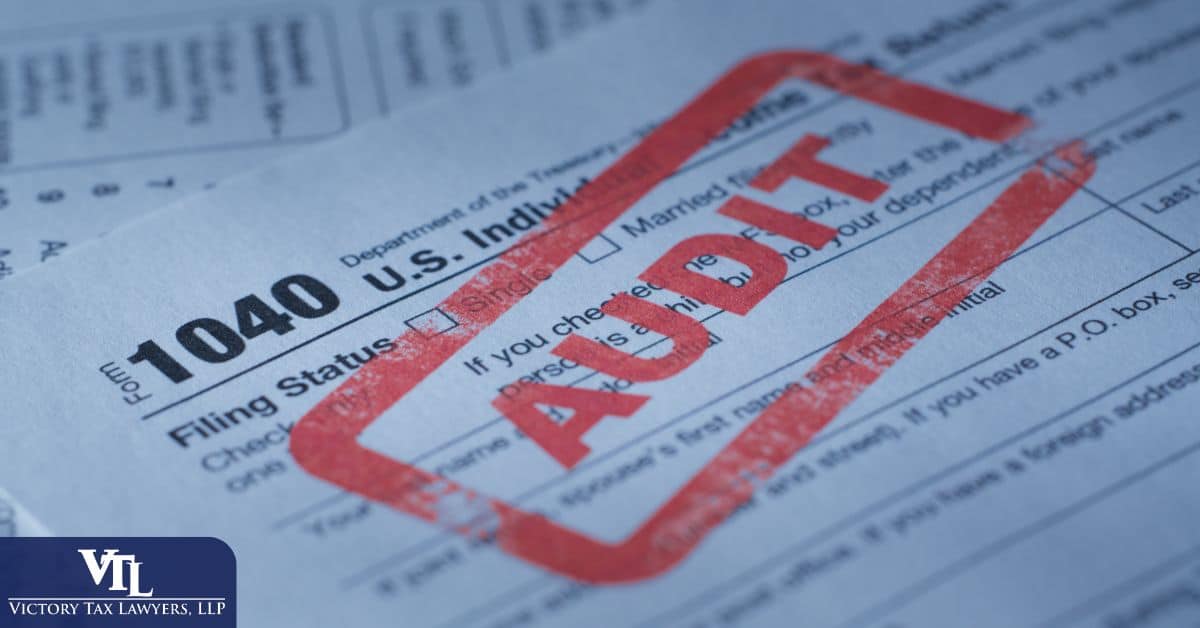
Receiving an IRS audit notice can be unsettling, but it does not automatically mean you’ve done anything wrong. An IRS audit notice is a formal letter informing you that the IRS is reviewing your personal income tax return or business tax return to verify that the information you reported is accurate. The agency may request detailed financial records, bank account statements, account statements, a physical receipt, or other documents to confirm your income, deductions, credits, and allowable expenses.
The goal is to ensure you paid the correct federal income tax bill and complied with the tax laws when filing taxes. The IRS may select a return for review for several reasons, including math errors, missing income reported by employers or financial institutions, unusually large deductions or tax breaks, concerns about credits such as the Earned Income Tax Credit or Child Tax Credit, or discrepancies between your return and third-party information.
Some returns are also chosen through random selection or because they are connected to another taxpayer already under examination. Being audited does not automatically indicate fraud or wrongdoing, and it should not be confused with conduct that is considered tax fraud, such as intentionally creating false records or knowingly reporting inaccurate information.
Most audit notices are sent by mail, although the IRS may conduct certain audits through an IRS office appointment or, in limited circumstances, an in-person visit. Your notice will explain why your return is being examined, identify the documents the IRS needs, and outline the next steps. If you no longer have every requested document, you may still be able to provide alternative documentation that reasonably supports the information reported on your return.
For many small business owners, good documentation is often the best defense during an audit. Maintaining organized records and a reliable recordkeeping system throughout the year makes tax time significantly less stressful and can help resolve questions more quickly. Keeping receipts, invoices, mileage logs, and other supporting documents not only helps substantiate allowable expenses, but also reduces the likelihood of tax issues and makes it easier to respond to future audits if they occur.
Although an audit can feel overwhelming, you do not have to navigate it alone. An experienced tax attorney can help explain the audit process, communicate with the IRS, organize and present supporting documentation, and protect your rights throughout the examination. Having knowledgeable representation can make the process more manageable while improving your chances of resolving the audit efficiently and fairly.
What Are the Common IRS Rules and Limits for Claiming Expenses Without Receipts?
The rules on receipts are more specific than most taxpayers expect. The best known is the $75 rule. Under Treasury Regulation section 1.274-5, and as raised by IRS Notice 95-50, a paper receipt is generally not required for a section 274(d) expense that costs less than $75. Lodging while traveling is the exception. A hotel bill always needs documentary evidence, regardless of amount.
You should remember that the $75 rule waives the paper receipt. It does not waive the recordkeeping. You must still record the amount, the time, the place, and the business purpose in a log or diary. Sub-$75 expenses are not free of documentation. They simply do not need the physical slip.
A related myth deserves a direct correction. There is no fixed dollar amount you may deduct without any records under United States tax law. The popular $300 figure comes from Australia, where the tax office allows a set claim for certain work-related costs. It is not a rule in the United States. Here, a deduction must be substantiated with records or reasonably estimated within the Cohan limits. Anything unsupported can be disallowed.
The table below shows how the receipt rules differ by expense type. It is a general summary, not tax advice for your situation.
| Expense Type | Receipt Requirement | IRS Threshold / Limit | Alternative Proof Accepted |
|---|---|---|---|
| Business Meals | Subject to strict IRC §274(d) substantiation of the amount, time, place, and business purpose | Generally 50% deductible. A paper receipt is typically not required for expenses under $75, but contemporaneous records are still required. | Itemized expense log or diary, plus a credit card statement showing the merchant and a note describing the business purpose |
| Travel | Subject to strict IRC §274(d) substantiation requirements | Paper receipts are generally not required for expenses under $75, except lodging, which always requires a receipt regardless of the amount | Travel itinerary, mileage or travel log, and bank or credit card statements supporting the expense |
| Office Supplies | Standard substantiation rules apply | No specific IRS receipt threshold. If records are incomplete, a reasonable estimate may be allowed under the Cohan rule when supported by credible evidence. | Credit card or bank statements, vendor invoices, canceled checks, or other business records |
| Small Miscellaneous Expenses | Receipts are recommended whenever available | For IRC §274(d) expenses under $75, a paper receipt may be waived, but adequate records are still required. | Contemporaneous logs, bank or credit card statements, canceled checks, and other supporting documentation |
Business entertainment is generally no longer deductible. The Tax Cuts and Jobs Act eliminated the deduction for most entertainment expenses starting in 2018. Business meals remain generally 50% deductible when they are properly substantiated. So meals and entertainment are no longer a single deductible category. Treat the meal and the entertainment separately.
Two recordkeeping shortcuts are worth knowing because they reduce your reliance on receipts. The simplified method for home office expenses lets you deduct $5 per square foot, up to 300 square feet, for a maximum home office deduction of $1,500 per year. It relies on square footage instead of actual expense receipts. Separately, the standard mileage rate lets you deduct a set amount per business mile, set at 72.5 cents for 2026, in place of tracking fuel and maintenance receipts.
That rate is generous, but it comes with a condition. It requires a contemporaneous mileage log showing the date, miles, and business purpose of each trip. A mileage log is itself a strict section 274(d) record, and the IRS does not accept a log rebuilt from memory after the fact.
How Can You Reconstruct Missing Tax Records?

If your tax records are missing, the IRS generally allows you to reconstruct them using reliable evidence to support your deductions and other tax positions properly. Reconstructing records is not the same as creating fake receipts. Fabricating receipts or altering documents is tax fraud and can result in significant civil penalties or criminal prosecution. Instead, reconstruction involves rebuilding an accurate record of legitimate expenses using available documentation.
- One of the best places to start is by contacting the businesses you purchased from. Banks, vendors, suppliers, hotels, airlines, and other service providers often keep copies of invoices, receipts, and transaction histories for months or even years. Requesting duplicate records can help replace documents that were lost or destroyed.
- Bank and credit card statements are another valuable source of evidence. Although they may not contain the same level of detail as an itemized receipt, they usually show the merchant, transaction date, and amount paid. When combined with other supporting documents, these statements can help establish that a legitimate business expense occurred.
- You should also review your email inbox and online shopping accounts. Many retailers and service providers send order confirmations, invoices, shipping notifications, or payment receipts by email. If the purchase was made online, your account order history may provide additional documentation that supports the transaction.
- Accounting software and expense-tracking apps can also help rebuild missing records. Programs such as QuickBooks can import historical transactions from linked financial accounts, while mileage-tracking apps such as MileIQ can help recreate business mileage based on past trips and travel patterns. These digital records can strengthen your documentation when original receipts are unavailable.
- Finally, working with a qualified accountant or bookkeeper can make the reconstruction process more accurate and efficient. A tax professional can help organize your financial records, identify acceptable supporting evidence, and ensure your reconstructed documentation meets IRS substantiation requirements, reducing the risk of problems if your return is examined.
Reconstructing Records Saved a Business Owner’s Tax Deductions
One client came to us after receiving an IRS audit notice for a Schedule C business. During a move, they had misplaced nearly an entire year’s worth of paper receipts and believed they would lose every business deduction they had claimed.
Instead of assuming the deductions were gone, we helped reconstruct the records using bank statements, credit card transactions, vendor invoices, appointment calendars, and mileage logs. We also contacted several vendors to obtain duplicate invoices and payment histories. While certain expenses subject to IRC §274(d) required stricter substantiation, many ordinary business expenses were successfully supported with alternative documentation.
As a result, a substantial portion of the claimed deductions was preserved, significantly reducing the additional tax proposed during the examination. Every audit is different, and past results do not guarantee future outcomes, but this illustrates an important point, missing receipts do not automatically mean you lose every deduction. The quality of your reconstructed records often determines the outcome.
How Can You Prevent Receipt Loss and Improve Recordkeeping Going Forward?
The cheapest audit defense is a habit. Small business owners who keep accurate records rarely face the scramble of reconstructing a year from statements and calendars. We always advise clients to start with capture. A receipt-scanning app photographs a slip the moment you get it and files a digital copy, which does not fade or vanish in a move. Cloud storage keeps those images off a single device that could fail. Pair the scans with a simple monthly routine.
Match the receipts to your bank and credit card statements, note the business purpose while you still remember it, and flag anything unclear before the memory is gone. Keep your physical and electronic records organized by tax year and by category. Separate business costs from personal expenses at the point of entry. For section 274(d) items such as travel, meals, and vehicle use, always log the amount, time, place, and purpose. A short entry made the same day beats a perfect receipt found six months later.
Hold on to the records long enough to cover an audit. The IRS generally has three years from the date you file to examine a return. That window extends to six years when a return omits more than 25 percent of gross income, which the law treats as a substantial understatement. There is no time limit at all for a fraudulent return or a year in which no return was filed.
Due to the six-year rule, many advisors suggest keeping supporting records for up to seven years in defined situations, and longer for records tied to property. Good records are also how a taxpayer stays ahead of routine tax compliance, not just an audit.
Facing a Tax Audit or Missing Receipts?
Many articles stop after telling taxpayers to keep their receipts. That advice is not particularly helpful once receipts have already been lost. This guide focuses on what taxpayers actually need during an IRS examination. That practical perspective comes directly from our experience helping taxpayers respond to IRS examinations and tax controversy matters nationwide.
With over $100 million saved for clients since 2017, Victory Tax Lawyers, a Los Angeles-based tax firm, delivers experienced legal help you can count on to get real tax solutions. Get the honest, effective tax assistance you deserve. Contact us for a free consultation today!
Frequently Asked Questions
The questions below come up often in our consultations. The answers are general information about federal tax rules.
How Much Can I Claim on My Taxes Without Receipts?
There is no fixed dollar amount you may deduct without records under United States tax law. You must be able to substantiate the expense or reasonably estimate it within the limits of the Cohan Rule, and section 274(d) expenses cannot be estimated at all.
Can You File Taxes Without Receipts?
Yes, you can file a return without holding every receipt, because you do not attach receipts to the return itself. You must still be able to support your deductions with records or credible alternative proof if the IRS later audits you.
How Much Can You Claim on Expenses Without Receipts?
The answer depends on substantiation, not on a set cap. Expenses backed by bank statements, logs, or a reasonable Cohan estimate may stand, while unsupported amounts can be disallowed with additional tax and penalties.
What Is the IRS $75 Receipt Rule?
Under the $75 rule, a paper receipt is generally not required for a section 274(d) expense that costs less than $75, with lodging as the exception because it always needs documentary evidence. The rule waives the paper receipt only, so you must still log the amount, time, place, and business purpose.
What Happens If You Get Audited and Do Not Have Receipts?
The IRS may accept alternative documentation, or a reasonable estimate under the Cohan Rule, for expenses outside section 274(d). Unsupported deductions can be disallowed, which raises your tax and may add penalties, though a tax professional can help reconstruct records and take the matter to IRS Appeals.
Legal Disclaimer: This article is general educational information, not tax or legal advice, and it does not create an attorney-client relationship. Tax rules change and apply differently to each taxpayer. Consult a qualified tax professional or attorney about your specific circumstances before acting. Past results do not guarantee future outcomes.