
Owing back taxes can quickly spiral into a serious problem. Usually, navigating your tax obligations when you have back taxes will mean keeping track of numerous notices addressing different things, watching out for strict deadlines that must be met, and constantly trying to avoid penalties, interests, and liens. All of this can be a lot to keep up with.
If you’re already in a tough spot and having trouble managing your tax debt, you may be wondering if a tax attorney can step in and negotiate with the IRS on your behalf. The answer is yes! When it comes to federal tax issues, negotiating a settlement with the IRS requires you to be strategic in your approach and offer. A tax attorney is your best bet in such moments.
Beyond representing you before the IRS or tax court, an experienced IRS attorney provides clarity and direction during a challenging process. At Victory Tax Lawyers, our focus is on helping clients resolve their substantial tax debts and issues. What feels like an insurmountable challenge to most, our tailored tax relief services restore financial stability, provide clear solutions, and help you take control of your financial future. Connect with our tax experts to learn how we can help.
In this post, we’ll explore how tax attorneys skillfully manage IRS negotiations, the scenarios where their expertise is most impactful, and why their guidance is key to resolving IRS tax problems effectively.
What Does a Tax Attorney Do?
A tax attorney specializes in tax law and holds a license to represent clients before the Internal Revenue Service. Tax attorneys guide clients on matters related to tax law, resolve tax disputes through negotiation, and deliver compliance advice for both personal and business tax matters. Beyond delivering legal advice, they develop practical solutions tailored to each client’s distinct financial situation.
They also take on additional responsibilities, such as:
- Representing clients in audits and disputes
- Negotiating settlements through programs like the Offer in Compromise
- Structuring a client’s payment plan or installment agreement on an IRS tax debt
How Does a Tax Attorney Differ from Other Tax Professionals?
Tax attorneys have distinct legal skills that set them apart from CPAs and enrolled agents. Unlike other tax professionals, tax attorneys are the only tax professionals who are required to have a law degree to practice. Tax attorneys are generally a good option when you need help with potentially contentious or more complex tax issues, such as tax fraud investigations, criminal tax matters, audits, or tax litigation.
Their jobs usually require them to shuffle between negotiating with the IRS, managing legal disputes, and representing clients in court. One core advantage of working with a tax attorney is attorney-client privilege. Unlike CPAs or enrolled agents, who can be subpoenaed to give out your information during an IRS investigation, tax attorneys offer you full confidentiality.
CPAs are required to have a college degree in accounting or another business-related field, so their expertise primarily revolves around financial reporting, tax filing, planning, preparation, and general financial advice. Enrolled agents are IRS-licensed tax practitioners. They are federally authorized to represent taxpayers before the IRS in audits and tax collections.
Enrolled agents are often well-versed in the tax code and are great when you need someone to handle basic tax preparation, routine tax filings, responding to IRS notices, and other miscellaneous matters. While they can negotiate on your behalf, they do not have legal training and cannot provide the same level of representation as a tax attorney in high-risk or contentious cases.
While other tax professionals may be able to handle your routine tax needs, a tax attorney is the only one who has the legal training and expertise needed to stand against more serious IRS actions and successfully negotiate you out of the potential legal consequences of significant IRS debts, IRS lawsuits, or potential fraud allegations. For comprehensive support, schedule a free consultation with our team of IRS tax lawyers today.
Can a Tax Attorney Negotiate with the IRS?
Yes, a tax attorney can effectively negotiate with the IRS on your behalf. Experienced tax attorneys will work in your best interests and help you reduce liabilities, navigate tax bill disputes, and secure manageable payment arrangements that fit your financial budget. They’re equipped to handle a range of IRS-related issues and often help by:
1. Representing Clients in IRS Disputes
A tax attorney can advocate for you if the IRS challenges your tax return or imposes penalties. Tax attorneys have vast experience representing clients in both civil and criminal federal tax issues. They defend taxpayers in audits, appeals, or tax court, ensuring that procedural errors or rights violations do not inflate their liabilities. A tax attorney will protect your rights and work to reduce your liabilities where possible while guiding you toward settling with the IRS.
2. Advising on Tax Law and Compliance
Tax laws are constantly being revised. In 2023 alone, over 60 new rulings were passed. So, for instance, if you launch a startup and unknowingly decide to classify your workers as independent contractors, perhaps to keep your costs low, you may end up being slapped with retroactive payroll taxes, as the IRS often prefers to classify workers as employees rather than independent contractors.
An experienced tax attorney knows the laws in and out, so, for instance, there are different rules guiding labor law, which ultimately affect overtime pay requirements and minimum wages. The knowledge of the different aspects and nuances of the law makes it easy for them to proactively structure your finances to minimize risk.
3. Negotiate Payment Plans or a Tax Settlement
When you have significant penalties or tax debt that you can no longer handle, negotiation isn’t usually just an option- in most cases, it’s the only feasible path forward, and this is where the value of a tax professional shines through. Many don’t realize that the IRS can be flexible with the right push.
Tax attorneys are able to guide you in leveraging the tax laws and the loopholes in them to reduce or eliminate penalties altogether; they also guide you when negotiating an affordable payment plan or, in more dire cases, pursuing an Offer in Compromise so you’re not financially strained beyond your control. Your tax attorney’s negotiation skills will often help you secure better outcomes and lessen your financial burdens.
Beyond negotiation, tax attorneys handle tax lien removals, levy releases, appeals, and abatements. They navigate complex tax laws to resolve tax issues, safeguard your finances, and offer lasting peace of mind.
Why You Should Hire a Qualified Tax Attorney for IRS Negotiations
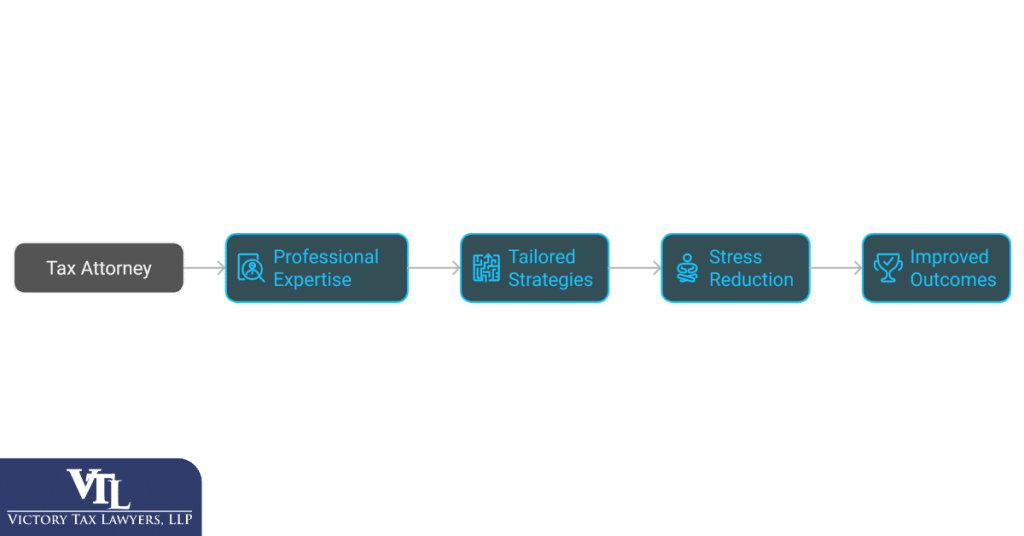
When it comes to IRS negotiations, understanding tax law is one thing, but using it to your advantage and outmaneuvering the IRS is another. Depending on the complexity of your tax issue, you may require the expertise of a tax attorney to properly guide you in the negotiation process. This is true, especially if you already have back taxes or penalties.
The IRS isn’t just another creditor; it has broad powers to collect what it’s owed, and without the right legal strategy, you could end up paying more than you bargained for. With a tax attorney by your side, you can be assured that you’re making the best possible decision every step of the way in your interaction with the IRS, whether you’re negotiating a settlement, disputing a tax bill, or setting up a payment plan.
What A Tax Attorney Brings To The Table
Here are some of the benefits of the expertise of a tax attorney:
- Professional Expertise – IRS negotiations can be dicey, and navigating the process needs someone who understands the nuances involved. Particularly if you have IRS debts, one wrong turn could leave you worse off. The reality is that the IRS, more often than not, holds a significant advantage over taxpayers in these negotiations. This imbalance can make it difficult for those without specialized knowledge to secure a fair resolution. Qualified tax attorneys bring detailed knowledge of the IRS and tax laws. This allows them to anticipate challenges and strategically guide you through tough negotiations.
- Tailored Strategies – No two tax situations are the same. Without a custom-tailored strategy, you risk agreeing to unfavorable terms that may worsen your situation. A skilled tax attorney will help you develop a customized plan to address your specific tax issue and, overall, reduce your liabilities. For instance, the IRS often prioritizes collecting the largest debts first, irrespective of interest rates. An attorney may work backward instead and negotiate with the IRS for you to pay off high-interest taxes before tackling lower-rate income taxes. This approach can help you save thousands in compounding fees.
- Stress Reduction – IRS disputes not only affect your finances; they are also emotionally and mentally straining. Many taxpayers live in constant fear of missing a deadline or a notice, having a lien placed on their property, their wages garnished, or their bank accounts levied. An IRS tax attorney on your side relieves you of this burden. They take control of the entire negotiation process and allow you to focus on moving forward.
- Improved Outcomes – With extensive experience negotiating directly with the IRS, a tax attorney can achieve results often unattainable on your own. Success against the IRS is never about luck but leverage, knowledge, and experience. A tax attorney knows exactly how to frame your case to meet the IRS’s criteria for relief. They understand the nuances involved in RCP, they know which financial details matter most in negotiations, and can present your case in a way that increases the likelihood of it being approved.
Schedule a tax attorney consultation early on to assess your situation and uncover opportunities for resolution.
How Does the Negotiation Process Between a Tax Attorney and the IRS Typically Work?
Beyond submitting paperwork and hoping for the best, IRS negotiations require strategic planning, knowledge of tax laws and how to leverage their provisions, and skilled negotiation tactics. Here’s a breakdown of how the negotiation process between a tax attorney and the IRS generally unfolds:
1. Initial Assessment & Case Evaluation
Before any negotiation begins, the tax attorney will first go over the taxpayer’s financial situation to thoroughly assess the case and find out the options available to them. This often requires the tax attorney to analyze the tax records of the taxpayer to determine their outstanding liabilities, penalties, and accrued interest; review their income, assets, and expenses to assess the taxpayer’s ability to pay (knowing that the IRS would do same); and identify any current IRS actions that may already be in place. At this stage, the attorney determines what relief options the taxpayer may qualify for and formulates a negotiation strategy accordingly.
2. Strategy Development, IRS Compliance Check, & Documentation
The IRS won’t negotiate if you’re still not tax-compliant. Before entering negotiations, your tax attorney will make sure that you have filed all required tax returns and that you’re meeting any ongoing tax obligations. Your tax attorney can then move forward to determine the best tax resolution option for you and compile the necessary documentation to support and uphold your case.
The IRS is not sentimental. It responds only to solid documentation. Thus, this may require you to submit paperwork such as your bank statements, pay stubs, and expense reports to corroborate your claims of financial hardship or medical records and other supporting evidence to establish reasonable cause and request for an abatement.
3. Resolution & Finalization
Once an agreement is reached, the attorney ensures that all necessary paperwork is submitted and finalized. All the while, your tax attorney acts as your intermediary, making sure that all interactions with the IRS are accurate, professional, and strategically sound and that every feedback from the IRS is responded to. The goal is to reach a tax resolution that minimizes the taxpayers’ debt and meets their financial capabilities. This may involve:
- Setting up automatic payments for installment agreements.
- Finalizing the terms of an Offer in Compromise and ensuring compliance with its conditions.
- Monitoring the taxpayer’s IRS account to prevent future compliance issues.
Possible Outcomes of Negotiation Scenarios with the IRS
Owing back taxes doesn’t mean you’re out of options. The Internal Revenue Service provides various resolution/settlement options for taxpayers owing back taxes to make tax repayment more manageable. Your approval for these resolution options often depends on your financial situation and eligibility. Working with a tax attorney during these negotiations is often a solid strategy to guarantee approval, as the IRS doesn’t approve just anyone for tax relief. You need to present your case strategically, backed by solid financial documentation, to be considered by the IRS, which is what a tax attorney helps you with.
Below are key resolution options and how they may apply to your situation:
1. Offer in Compromise (OIC)
If paying your full tax debt would create significant financial hardship, you may qualify for an Offer in Compromise (OIC). An Offer in Compromise allows eligible taxpayers to settle their tax debts for less than the full amount owed. The IRS looks at your income, asset-equity, expenses, and earning potential when assessing your OIC application.
Eligibility and approval for an OIC can be pretty demanding, and not many people end up qualifying for it. In fact, many DIY applications end up being rejected due to incomplete or improper documentation.
A tax attorney improves your chances by crafting a compelling case, ensuring your offer aligns with IRS guidelines. Their negotiation skills also improve the likelihood of approval.
2. Penalty Abatement
Sometimes, penalties and accrued interests inflate your original unpaid balance, making it more difficult for you to clear your debt and move forward. If this is your case, you may have a chance to secure a penalty abatement. Penalty abatement allows taxpayers to request a reduction or removal of penalties for failing to meet IRS requirements, such as late payments or filings. This option is typically granted when a taxpayer is a first-time offender. Those who can prove reasonable cause may be granted abatement as well (such as unforeseen circumstances, illnesses, financial hardships, IRS errors, or even reliance on bad tax advice).
A tax attorney can help you present your evidence in the most persuasive manner to ensure the IRS understands why your penalties should be waived.
3. Installment Agreements
An installment agreement allows taxpayers to pay their IRS debt in manageable monthly payments instead of a lump sum. For taxpayers who can’t afford to pay their full balance upfront but have a steady income, installment agreements, also known as an IRS payment plan, may be an option worth considering. Taxpayers can apply for an installment agreement with the IRS online or by mail. The IRS allows for both short and long-term plans depending on what the taxpayer can reasonably commit to without failure.
A tax attorney can help you negotiate reasonable terms with the IRS, ensuring that you don’t end up committing to an agreement that will strain you beyond what is feasible for you.
4. Currently Not Collectible (CNC) Status
If you’re genuinely struggling to afford basic living expenses, you can apply to have the IRS label your account as Currently Not Collectible (CNC). The CNC status pauses IRS collection efforts on your account temporarily; however, interest on your debts will continue to accrue. It’s important to note that CNC status does not automatically clear off your tax debts, as some assume. You continue to remain responsible for the debt, but the collection actions on your back taxes from older tax returns (e.g., bank levies, wage garnishments) are deferred.
You’ll need to provide proof of financial hardship before the IRS will grant you a CNC status. A tax attorney can help you compile and present evidence of your financial hardship, such as income documentation or medical expenses, in a way that meets IRS standards and truly portrays your financial distress.
5. Innocent Spouse Relief – Protection from a Partner’s Tax Debts
If your spouse (or ex-spouse) failed to report income or made errors on a joint tax return without your knowledge, you shouldn’t be held liable for their mistakes. Innocent Spouse Relief protects you from paying additional taxes, interest, or penalties caused by your spouse’s actions. A tax attorney ensures your request is properly substantiated and supported by legal precedent, improving the likelihood of IRS approval.
6. Full Payment of Tax Liability
This is the fastest way to clear your tax debt and get the IRS off your case. For those who can pay their IRS tax debt in full, whether through upfront savings, liquidated assets, or financial assistance, this resolution ends every ongoing conversation with the IRS, eliminates IRS enforcement actions, halts additional interest or penalties, and gives you a fresh start.
Even with the apparent benefits, many do not choose this route because paying off their tax debt at once is sometimes impossible, and even if it’s something they can afford, doing so may put them under undue financial strain.
Your tax attorney will help you assess whether paying your back taxes in full is a practical solution based on your unique situation. They will verify that your payments are correctly processed and provide guidance to help you avoid future tax problems.
When Should You Hire a Tax Attorney?

For routine tax filing, you may be able to keep up with the dos and don’ts yourself, but it’s not advisable to go DIY when you’ve entered the radar of the IRS for unpaid taxes. Here are instances when it is recommended to work with a tax attorney:
1. Receiving an IRS Notice of Audit or Legal Action
When the IRS wants to make a move, it first sends a notice so that you’re informed and you’re given ample time to remedy the situation or prepare for their next steps. IRS notices often signal potential tax audits or legal actions against you. An IRS audit can quickly lead to additional penalties or even criminal charges if the IRS finds out there has been a mistake, a case of underreporting, or tax evasion. A tax attorney ensures that your rights are protected, helps you prepare the necessary documentation, and, if needed, represents you in court or negotiations to minimize liabilities.
2. Facing Significant Tax Debt or Penalties
Your tax debt will not somehow automatically disappear. Also, the IRS will not get tired of fining you or accruing penalties and interests on your account just because you’ve been ignoring their attempts at getting you to pay your taxes. Unresolved tax debt accrues interest and penalties that can make your financial situation even worse. You could also be at risk of facing more severe collection actions. Top tax attorneys can help you get into one of the IRS forgiveness programs so that you can pay up what you owe without jeopardizing your financial future.
3. Dealing with Complex Tax Situations
Not all tax problems are straightforward. Some scenarios require you to have the help of specialized expertise to avoid mistakes and penalties. Scenarios such as business compliance challenges, stock options, real estate transactions, crypto-related transactions, foreign transactions and the like require specialized knowledge of the tax law to be able to handle it. In plain terms, such scenarios require a tax attorney.
4. Business Tax Situations
If you run a business, then you know that tax obligations can be a lot to deal with. Talk about keeping tabs on payroll taxes, deductions, and multi-state filings. A tax attorney can help you structure your business in a way that minimizes your tax liabilities, protects you against IRS actions, and keeps you compliant with the different tax laws that pertain to your operations.
5. International Tax Compliance
If you earn income abroad, have foreign assets, or are subject to FATCA (Foreign Account Tax Compliance Act) regulations, failing to properly report international income can trigger severe penalties. A tax attorney can help you comply with IRS foreign asset disclosure laws, avoid double taxation, and take advantage of any tax treaties that may benefit you.
If your tax issue is minor, a CPA or enrolled agent may do. But if the stakes are high, hiring a tax law firm to handle your case isn’t just good advice; it’s essential.
How to Choose the Best Tax Lawyer
Finding the right tax lawyer can make all the difference. Tax attorneys often provide first-time clients free consultations. Use that to gauge if they’re right for you and if they fit your needs. Here are some things to look out for when hiring a tax attorney.
When hiring a tax attorney, double-check that they are fully licensed and have state-required and other necessary credentials. They should also be experienced in their field and have a solid grasp of IRS regulations and tax codes. The person should have a strong track record in successfully handling IRS settlements and negotiations.
Beyond credentials, gauge their experience and approach. Ask if they’ve handled cases similar to yours. What’s their success rate? For instance, even though the IRS rejects most OIC applications by taxpayers, we have a long trail of OIC success stories. The point is, their familiarity with your specific situation can make a huge difference in how they strategize, the steps they take, the options they suggest, and what your eventual outcome will be.
Additionally, inquire about their fee structure. Ask to know how they charge. Do they charge hourly, have a flat rate, or work on a contingency basis? This will help you confirm what you should expect to pay at the end of the day and also help you make sure their services align with your budget. When checking costs, don’t be scared to shop for prices. Only go for an attorney who is within your budget.
By carefully evaluating their expertise and approach, you can find experienced tax attorneys equipped to advocate for your best interests and deliver favorable results.
How Much Does It Cost to Hire an Experienced Tax Attorney?
If you’re considering hiring a tax attorney, you’re likely also wondering about the cost and whether tax attorneys are worth such spending. The truth is, while it may not be a negligible cost, the cost of hiring a tax attorney is almost always justified by the results they bring to the table. The reality is that there’s no fixed price for tax attorney services because every case is different. The overall cost depends on a range of factors, including the complexity of your case, the services required, the experience of the professional involved, your location, and the billing structure of the attorney.
Typically, hiring an IRS lawyer on an hourly basis costs between $200 to $500 per hour, though highly experienced attorneys may charge even more. Attorneys who charge a flat rate often charge anywhere between $2,000 and $4,000, depending on how straightforward the case is. Some attorneys prefer to operate on a retainer basis, requiring an upfront payment before beginning work. Their retainer fee serves as a deposit that the attorney draws from as they bill for their services. The typical retainer fee ranges from $2,000 to $10,000, depending on the nature of the case and the attorney’s expertise.
Again, a skilled tax relief attorney is non-negotiable, especially if your case is already within the purview of the IRS. If the stakes are high, you don’t want to jeopardize or gamble your outcomes in the name of saving a few bucks. The IRS plays to win, and without an experienced advocate on your side, you could end up with steeper financial collection actions.
A well-negotiated settlement, penalty reduction, or structured payment plan can easily offset the cost of legal representation. So, really, if you think long term, you’d actually see that the upfront investment for a tax attorney always pays for itself in the form of lower tax liabilities, reduced penalties, and peace of mind knowing the IRS isn’t breathing down your neck.
Need Assistance from an IRS Tax Lawyer?
Dealing with the IRS, especially when you’ve defaulted on taxes, requires due care, diligence, and, most often, the assistance of a tax professional to guide you in making decisions that will lead to the most favorable outcome.
A top tax attorney has a strong handle on tax laws and the experience necessary to provide the legal support and representation you need during complex IRS negotiations. With a tax attorney by your side, you have an advocate helping you navigate audits, secure settlements, and deliver tax resolution solutions that protect your financial future.
At Victory Tax Lawyers, we deliver results where they matter most. Our tax lawyers bring a result-driven approach to handling challenging tax debts and IRS issues. From tailored tax relief strategies to comprehensive case management, we provide the support you need to move forward. Start your journey to financial stability today, and let us shoulder the burden for you. Schedule your free attorney consultation today.
Frequently Asked Questions
Why is it Important to Act Quickly in Tax Debt Resolution Scenarios?
Delaying action on IRS tax debt can lead to penalties, accrued interest, and aggressive IRS enforcement measures such as wage garnishments, tax liens, or levies to your bank account. The sooner you engage an experienced IRS lawyer, the more options you have to negotiate a favorable resolution.
What Specific Skills Are Crucial for a Tax Attorney Dealing with the IRS?
A tax attorney must have in-depth expertise in tax law and IRS procedures. They must also have a strong handle on negotiation and advocacy to be able to secure favorable outcomes for clients. Tax attorneys must necessarily have an eye for detail and strong analytical skills to be able to successfully maneuver the steep demands of the IRS landscape. Litigation experience is also very important since their job often requires them to represent clients in tax disputes or court proceedings.
How Can You Verify a Tax Attorney’s Track Record with the IRS?
Look for firsthand experiences from previous clients to assess their success rate and service quality. Also, check their success stories. Many reputable tax law firms showcase resolved cases that demonstrate their expertise. Ensure the attorney is in good standing with the state bar and has no disciplinary actions. And ensure the attorney has years of experience under their belt to justify their claims.