The Internal Revenue Service (IRS) Withholding Compliance Program (WCP) was designed to improve the success of IRS actions in regard to under-withheld tax compliance by ensuring that taxpayers have the correct amount of federal income tax withheld from their wages. The goal of the program is to prevent under-withholding, which can lead to significant tax debts, interests, and penalties for taxpayers.
Taxpayers who have been underpaying income taxes or submitting inaccurate withholding information for due taxes may sooner find themselves in the WCP. To request a release from the WCP, you’ll need to show evidence of full compliance with your filing and payment obligations. Understanding how to do so can help you regain control over your paycheck and avoid further complications with the IRS.
You can leave it to our team of experienced attorneys at Victory Tax Lawyers to help you resolve whatever issue you may currently be having with the IRS. Whether you need assistance with tax relief services, negotiating a payment plan, or requesting a WCP release, we’re available to guide you every step of the way. Schedule your free attorney consultation today.
This article covers what you need to know about the program, what it is and how to get a release if you’re caught up in it.
What Is the IRS Withholding Compliance Program?
Why Am I in the Withholding Compliance Program?
A a taxpayer, you may have landed in the IRS WCP because your withholding doesn’t align with your true tax liability. In plain terms, the IRS believes that you are not having enough taxes taken out of your paycheck. This occurs when you may have claimed too many withholding allowances or you have exemptions on your Form W-4, which results in smaller withholdings and will eventually lead to a larger tax bill by the end of the year.
Additionally, the IRS takes note of recurring patterns. So, if you consistently owe a certain amount when you file your return or if you have unpaid tax debts that are consistently piling up, you may find yourself in WCP. The goal is to make sure you are fully contributing the right amount all through the year instead of having to catch up later with interest, tax penalties and in worst cases, a massive financial hit.
Sometimes, even what could be seen as honest mistakes can land you in the program. For instance, changes in your income which may be due to job switches and side gigs, or misunderstandings about how to accurately fill out form W-4 can all trigger withholding issues.
What Is a Lock-In Letter?

A lock-in letter is an official IRS notice given to employers instructing them to withhold federal income tax from an employee’s wage. This letter is issued when the Internal Revenue Service believes the employer has not withheld enough taxes, often due to the employee submitting multiple incorrect W-4 forms or claiming too many withholding allowances.
The IRS doesn’t issue a lock-in letter randomly. Usually, the employee in question must have been on their radar for a while. Ideally, they send two different notices: Letter 2800C and Letter 2801C. The first letter, which is Letter 2800C, is sent to the employer and mandates them to disregard any prior W-4 the employee has submitted and instead apply the specific withholding rate and filing status outlined in the lock-in letter to the employee’s pay going forward.
After the first notice has been sent to the employer, Letter 2801C is sent to the employee to update them that their employer has been instructed to enforce the new withholding rate. This letter also emphasizes that the lock-in order can be canceled if a new W-4 leads to more tax being withheld than the lock-in letter specifies.
The purpose of all this process is to correct under-withholding and make sure that the employee pays the right amount of taxes. It usually takes years of non-compliance for the IRS to issue a lock-in letter. In fact, the IRS first issues a 2802C letter to employees, notifying them that their federal income tax withholdings are low. This letter is a self-correcting letter. The goal is to have them, the taxpayer, self-correct. If this letter with its recommendations is ignored, the IRS then sends a lock-in letter.
The default lock-in withholding rate is “single, zero allowances.” This means the employee’s paycheck is taxed at the highest rate possible. Specifically, the IRS assumes the employee has a single filing status (irrespective of what their actual filing status may be) and allows zero allowances (which means no tax deductions or credits are factored in). This arrangement significantly increases the amount of tax withheld from the employee’s paycheck and reduces their take-home pay at the end of the day.
Once an employer receives an IRS lock-in letter, they have a deadline of 60 days to implement the lock-in rate specified in the letter. As an employee, you have 30 days from the day of receiving the notice to contest the IRS decision. Letter 2801C contains the contact details you need to be able to speak with the Withholding Compliance Unit (WHC). Once this rate takes effect, it becomes very difficult to withhold at a lower rate. Difficult because the IRS is often set in its ways, but not impossible because the lock-in can be appealed.
If an employee wants to appeal to adjust or contest their withholding allowances after they’ve been ‘locked in,’ then they must submit a revised W-4 along with other supporting documents directly to the IRS for approval. The IRS will review the appeal and decide if they should approve the new withholding rate or stick with the one in the lock-in-letter.
Criteria for Release From IRS Withholding Compliance Program
Getting placed into the IRS Withholding Compliance Program is not perpetual. However, being released from the program mandates you to fulfill some specific conditions. The IRS doesn’t necessarily lift a lock-in just because time has passed or your situation changes. You must actively prove that your withholding compliance is fully back on track by doing the following:
Full Payment of Tax Liabilities
The IRS expects all past due taxes to be addressed before anything else. This is the foundation for what is known as being in “good standing” with the IRS. In practical terms, this means you, as the employee, must either pay off any outstanding tax balances or resolve them through relief options like an Offer in Compromise (OIC), installment agreement, or penalty abatement. If you still owe back taxes, the IRS will be very reluctant to lift any restrictions on your withholding.
Consistent and Accurate Federal Income Tax Withholding
Another key requirement for release from the IRS Wage Compliance Program (WCP) is demonstrating consistent and accurate tax reporting after the lock-in letter takes effect.
The IRS looks for a track record showing that your employer is following the withholding instructions and that you are not attempting to reduce your withholding by submitting new Form W-4s that conflict with the lock-in order. Stability and consistency send the right signals to the IRS that they can now trust you to manage your withholding correctly.
Resolution of IRS Disputes
If you disagree with the original IRS findings that triggered your lock-in status, you must resolve the dispute before the IRS will consider your release request. This could involve providing supporting documents, amending your prior tax returns or working through the IRS appeal process. Until all open disputes are fully resolved and closed, the IRS will not lift the withholding restrictions.
Timely Filing of Required Forms
Time is of the essence when dealing with the IRS, especially when you’re already under their monitoring. You must consistently submit required forms, such as Form 941 (employer’s quarterly federal tax return) or Form 944 (employer’s annual federal tax return). According to the IRS, if you timely meet all your filing and payment obligations for three consecutive years, you can request that we release you from the Withholding Compliance Program, even if you have been subject to a lock in rate.
You can’t afford to miss deadlines or submit incorrect information, as it can delay your release from the program and may trigger further IRS scrutiny.
Requesting a Modification or Release
Simply sitting back and hoping the IRS will check in and release you will be futile. You must formally request a modification or release from the program. To make the request, you will be required to submit a new Form W-4 along with other documentations to prove that your financial situation has changed. In most cases, the IRS will require you to send the request directly to them and not your employer, often through the contact details provided in your lock-in letter.
Other situations where you can claim exempt status and expect your release request to be approved include:
- Where the IRS determines the lock-in was issued in error
- If you can prove insolvency and the Insolvency Unit has instructed your release
- If you’ve filed for bankruptcy,
- if you have a pending or approved Offer in Compromise (OIC)
- If you are in a Combat Zone with an active freeze code
- If you’re not subject to withholding
How Do I Get An IRS Lock-in Letter Removed?
Meeting the criteria for release is just one part of the process; the real challenge is navigating the IRS’s system to ensure a smooth resolution. Requesting the IRS to recall any of its decisions can be dicey even if you’re in the right, which is why you want to hire a good attorney to handle the paperwork and stand in for you should the need to directly interface with the IRS arise.
We can guide you through the process of requesting a release from the IRS WCP and manage your complex interactions with the IRS. Our experienced attorneys will see to it that your documentation is on point and complete. We’ll also and make sure your case is presented in the best possible way to maximize your chances of approval. Schedule a free consultation with us today.
Here’s how to request release from the IRS withholding compliance program:
1. Review Your Eligibility for Release
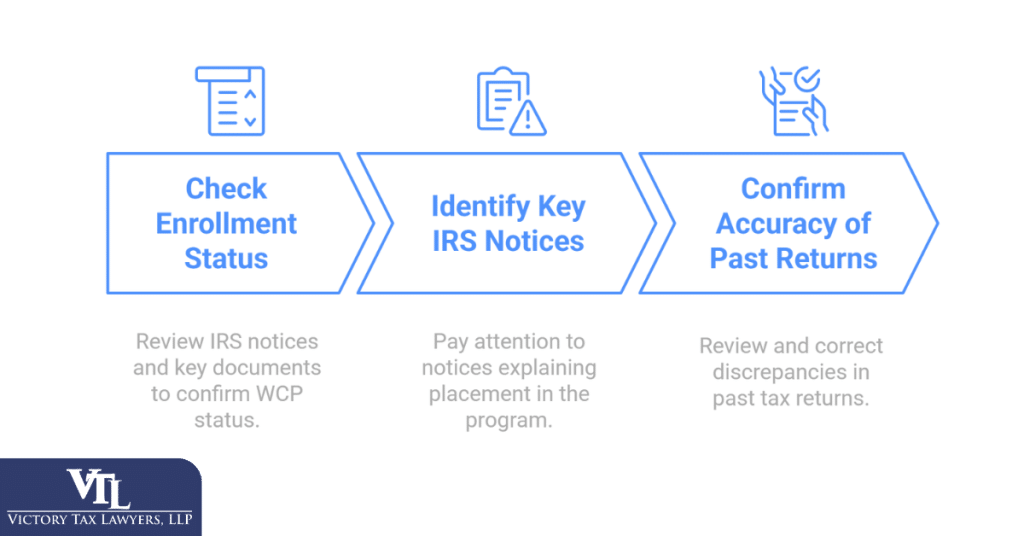
Before submitting a request, take time to confirm that you’ve met all the IRS criteria for release. Begin by reviewing any notices or correspondence you have received from the IRS, such as Letter 2801C or the lock-in-letter itself. Pay close attention to these documents as they explain the problem the IRS has identified, your current withholding status and any instructions for resolving the issue.
Next up, review the accuracy of your past tax returns and resolve any discrepancies. If you detect any errors or find unfiled returns, correct them immediately. Having unresolved issues on your record will automatically cause delays or even block your release request.
2. Submit Form 4669
If your lock-in issue was as a result of under-withholding by a current or past employer, you’ll need to submit Form 4669. Known as the “Statement of Payments Received,” this form is essential for taxpayers disputing withholding discrepancies. Form 4669 is used to document income for which no federal income, such as income, Social Security, or Medicare taxes, have been withheld.
By filing this form, you’re stating to the IRS that the correct employment taxes were either underpaid or omitted altogether, allowing you to seek relief under IRS provisions like Sections 3402(d) or 3102(f)(3). The processes involved are:
- Your employer first fills out basic payment details such as your income type, tax year, and withheld amounts. Once the details are filled, the form is sent to the employer.
- You, the employee will then review the form, confirm the amounts, correct any errors, and sign it to acknowledge receipt of income without proper withholding.
- While not always mandatory, submitting the form along with your payroll records will help to protect you in case of future audits.
Accuracy and timeliness also matter a lot here. Any mistake made when filling out Form 4669 could easily delay or deter your request, so double check all the information you’re providing.
If you’re unsure how to proceed and wouldn’t want to take the risk alone which will end up reducing your approval chances, reach out to a tax professional or even contacting the IRS directly for better clarification.
3. Send the Request to the Correct IRS Office
Once you’ve prepared everything, you can then send your updated Form W-4 and any other supporting document to the appropriate IRS office listed in your IRS lock-in letter or IRS correspondence. Mailing your request to the wrong office or missing documentation is a common reason for processing delays. So, be sure to double-check the filing instructions provided in the notice or consult the IRS website for the latest mailing addresses or electronic submission options.
4. Follow Up on Your Request
After you’ve submitted your request, don’t just sit back and wait. Follow up the request using the IRS online case tracking tools or call the IRS directly with your case number to track the status of your request. Bear in mind, though, that you may have to endure longer wait times, especially in a case where you submit your request during peak tax seasons. If you’ve hired a tax attorney, they can track your case and handle communications on your behalf.
What to Expect After Submitting Your Request for Release
Once you’ve submitted your request for release from WCP, it takes the IRS 60–90 days to process and resolve requests if there are no delays. However, if delays occur in cases where the IRS request for additional documents, is facing backlogs, or if your filed for request during high-volume periods like tax season, the processing timeline will be prolonged. Once the IRS is done with their review, you’ll receive a letter to inform you the outcome of your request. It could be either a confirmation letter or a denial notice.
If your request is denied, it doesn’t mean you’re out of options. You have full right to push for an appeal. This often involves submitting stronger documentation or additional clarification to adequately back up your case. If you’re considering an appeal, have a tax attorney represent you. An experienced attorney is able to easily identify what must have gone wrong the initial time and help you gather the right supporting documents to strengthen your appeal.
On the other hand, if your request is approved, you’ll receive an official confirmation notice. With this can then breath a little easier as you return to your normal withholding arrangement. At this point, keep your employer updated on the positive outcome and make sure your W-4 and payroll records adequately reflect the correct withholding amount. Once you do this, you’ll automatically skip underpaying taxes and running into problems again.
How to Avoid Future Enrollment in the WCP

Getting out of the WCP doesn’t mean you’re off the IRS’s radar for good. If you don’t maintain the correct amount of income tax withholding going forward, you could find yourself back in the program with another lock-in letter from the IRS. Take the following steps to avoid future complications;
Make Sure You Have Accurate Withholding From the Start
Take time to double-check your Form W-4 as soon as you’re released from the WCP. Make any updates needed to reflect your current situation which could be a change in income, a new dependent or shift in your filing status.
Keep Your Form W-4 Updated Regularly
Your withholding are prone to changes, just as life is. On this note, the IRS recommends reviewing your Form W-4 at least once in a year or anytime something major happens like getting married, starting out a new job or birthing a new child. Keeping your information updated will help you prevent underpaying or overpaying your taxes.
Use the IRS Withholding Estimator Tool
To determine how much you should be withholding, use the IRS free online withholding estimator tool to do proper calculation. Using this tool, you can estimate your federal income tax withholding and see how adjusting your W-4 could affect your fund or the amount you owe. You should also keep in mind that this is a good way to stay ahead of any surprises, mostly when it comes to dealing with WCP lock-in.
Seek Professional Guidance When Needed
When the IRS withhold tax, it can be overwhelming and guessing your way through the entire withholding compliance process could land you into more trouble. If you’re unsure about how to correctly set things up, seeking professional guidance from a tax professional is the best move to make. They can properly review your situation, recommend the right withholding settings you and give you tailored advice to avoid triggering another enrollment in the WCP.
Need a Tax Lawyer for IRS WCP Release?
Getting the IRS to approve your request for a WCP release requires you to play by their rules – right from the very first step of filling out the Statement of Payments Received form down to its submission. Once you’ve submitted your WCP release request, track the progress of your case and don’t fail to promptly respond to any follow-up steps that may be required by the IRS. Staying proactive throughout the process can significantly improve your chances of getting your request approved and help you avoid unnecessary setbacks..
If you’ve received a lock-in letter from the IRS, don’t complicate things further by trying to navigate the process all by yourself. In situations like this, consulting an experienced tax attorney is a wise decision. An experienced tax attorney can review the lock-in letter and should be able to help you get the IRS to modify or remove the lock-in letter. You can reach out to us today for free to draft up a personalized strategy for you and discuss your next steps. We’re one of the best tax lawyers in the area of withholding compliance.
FAQs
What Happens if I Ignore a Lock-In Letter?
If you ignore a lock-in letter, your employer is still mandated to follow the IRS’s instructions anyway. They will start withholding taxes at the lock-in rate that has been stated by the IRS, not minding whatever you may have included on a new Form W-4. Ignoring the letter will not stop the new withholding. Instead, it could result in bigger problems in the coming tax season.
Can a Lock-In Letter Be Entirely Removed?
Yes, a lock-in letter can be entirely removed. However, this will happen only when you fix the issue that caused it. You must demonstrate to the IRS that your withholding is now correct and that you’re no longer at risk of underpaying taxes. If the IRS is satisfied with your proof and you then qualify for the removal, may issue a release letter to cancel the lock-in.
Will a Lock-In Letter Affect My Tax Refund?
Yes, a lock-in letter could affect your tax refund. Higher withholding might imply that you get a bigger refund when you file your taxes. However, it also results in lesser take-home pay from each paycheck.
What Happens if an Employee Does Not Provide a New Form W-4 After Receiving a Self-Correcting Letter 2802C?
If an employee doesn’t submit an updated Form W-4 after they’ve received the 2802C self-correcting letter, the IRS will go on to issue a “lock-in letter” to both the employer and the employee. The employer will get a 2800C lock-in letter, while the employee will receive a 2801C lock-in letter. The both letters are the IRS way of telling your employer to withhold your federal income tax at an increased rate until a new, compliant W-4 is submitted.
What Happens if an Employee Appeals a Lock-In Letter and the IRS Issues a 2808C Letter?
The IRS initiates an appeal process the moment an employee challenges a lock-in letter. If, after reviewing the appeal, the IRS rules in favor of the employee, they will issue a 2808C letter.
The 2808C letter is the IRS’s way of letting both the employee and the employer know the final withholding instructions after considering the employee’s appeal or updated information. Once the IRS issues the 2808C letter, the employer has to start following the updated withholding rules right away.
✓ Attorney-Reviewed Content
This content was written and reviewed by the licensed tax attorneys at Victory Tax Lawyers, LLP. Our attorneys specialize in IRS tax relief and are licensed members of the California State Bar with a nationwide practice.
Last Reviewed: 2026 · Meet Our Attorneys →