The IRS (Internal Revenue Service) may send you official letters to inform you of any tax-related issues you may have. These letters, known as IRS notices, are the primary way the IRS communicates with you about tax matters. Each type of notice serves a specific purpose in the collection process. One such notice is the CP504, which warns that the IRS may seize your assets if your tax debt remains unpaid.
Understanding what the CP504 notice entails will allow you to take timely action to resolve the issue and avoid further complications. If you are unable to pay the full amount, there are payment arrangements available.
Victory Tax Lawyers can guide you through how to respond to a CP504 notice. We offer expert advice on your options, including payment plans and potential tax relief programs. Take the next step in resolving your tax issues. Schedule a free consultation with us today and explore your options.
In this post, we will clarify what a CP504 notice is, why the IRS issues it, and the steps you should take to resolve the matter. We will also discuss the potential consequences of ignoring the notice, the resolution options available, and how a tax attorney can help guide you through the process.
What Does IRS Notice CP504 Mean?

Officially titled Notice of Intent to Levy, IRS Notice CP504 is a notice notifying you that you still have unpaid balances despite previous reminders. Prior to receiving this notice, you should have already received other letters from the Internal Revenue Service. The CP504 signals that the IRS is transitioning from reminders to taking collection actions. This can include levying your state tax refund and possibly moving forward with other enforcement measures.
The Internal Revenue Service issues this notice after multiple attempts to collect unpaid taxes have gone unanswered. By the time you receive a CP504, it means the IRS believes you have not responded adequately or resolved your balance. It doesn’t authorize the IRS to levy your wages, bank accounts, or social security benefits just yet. Only if your tax debt grows further and is unresolved can it be labelled a seriously delinquent tax debt. At this point, the IRS may proceed with more aggressive enforcement actions.
Why Did You Receive a CP504 Notice from the IRS?
You received a CP504 notice because the IRS believes you have an outstanding balance from a previous tax return. At this point, this shouldn’t be the first notice you received. It’s the final reminder telling you that you still owe taxes after you have received earlier notices such as CP14, CP501, or CP503, but didn’t make an attempt to respond or pay the amount due.
Essentially, the CP504 is the IRS’s way of saying time is running out and that they’re preparing to take stronger collection actions.
What Happens if You Ignore a CP504 Notice?
If you ignore a CP504 notice, the IRS can take serious steps to collect the debt you owe. This notice is a warning. It means the IRS is prepared to take your property if no action is taken.
Under federal law (Section 6331 of the Internal Revenue Code), the IRS can:
- Seize your wages (called a wage garnishment)
- Take money directly from your bank accounts
- Claim other property or assets you own
You might also face a tax lien, which is a public claim against your property. This can damage your credit score and make it difficult to borrow money or sell assets. The IRS may even intercept your state tax refund or Social Security benefits to cover the debt.
Furthermore, if your tax debt is large and remains unpaid, the IRS can certify it as “seriously delinquent” under the Fixing America’s Surface Transportation (FAST) Act. This allows the U.S. State Department to revoke or deny your passport.
In some cases, you’ll receive a separate letter letting you know about your right to a Collection Due Process (CDP) hearing. This is your chance to pause enforcement actions and make your case before the IRS moves forward. Acting quickly here can protect your income and assets.
What Comes After IRS Notice CP504?

If you don’t respond to the CP504, the IRS may issue an additional notice, such as the CP90 or LT11 notice. A CP90 is a formal Notice of Intent to Levy under Internal Revenue Code Section 6330, which gives you the right to a hearing before the IRS can seize your property. Receiving this notice means the Internal Revenue Service is preparing to seize your assets, such as wages, bank accounts, or property, to satisfy your tax debt.
The IRS may issue this notice concurrently with filing a federal tax lien against your assets, which can damage your credit and make it harder to sell or borrow against your property. These are serious enforcement tools and clear signs that immediate action is needed.
How Much Time Do I Have to Respond to a CP504?
You typically have 30 days from the date of the notice to respond or pay the outstanding balance. If you miss this deadline, the IRS can move forward with enforced collection actions. The interest and penalties do not halt during this time. They continue to accumulate, increasing your total tax liability until the full amount is resolved.
What if I Don’t Agree With the CP504?
If you don’t agree with the CP504, contact the IRS right away. Call the toll-free number on the notice and speak with a customer service representative who can help you review your account. The toll-free number is located near the top of the second page of your notice. Be sure to have your paperwork ready as you place a call. Keep your cancelled checks, amended returns, or other supporting documents handy, so you can provide proof and discuss your case efficiently. The customer service representative can also help confirm if your previous payment has been properly applied or guide you on the next steps to dispute the balance.
The IRS generally prohibits enforced collection actions like levies until after you’ve been given a chance to request a Collection Due Process hearing, or the Collection Appeals Program (CAP) to formally dispute the IRS’s actions and present your case before the IRS Independent Office of Appeals. Nonetheless, ignoring a CP504 notice could forfeit that opportunity.
What You Should Do if You Receive a CP504 Notice
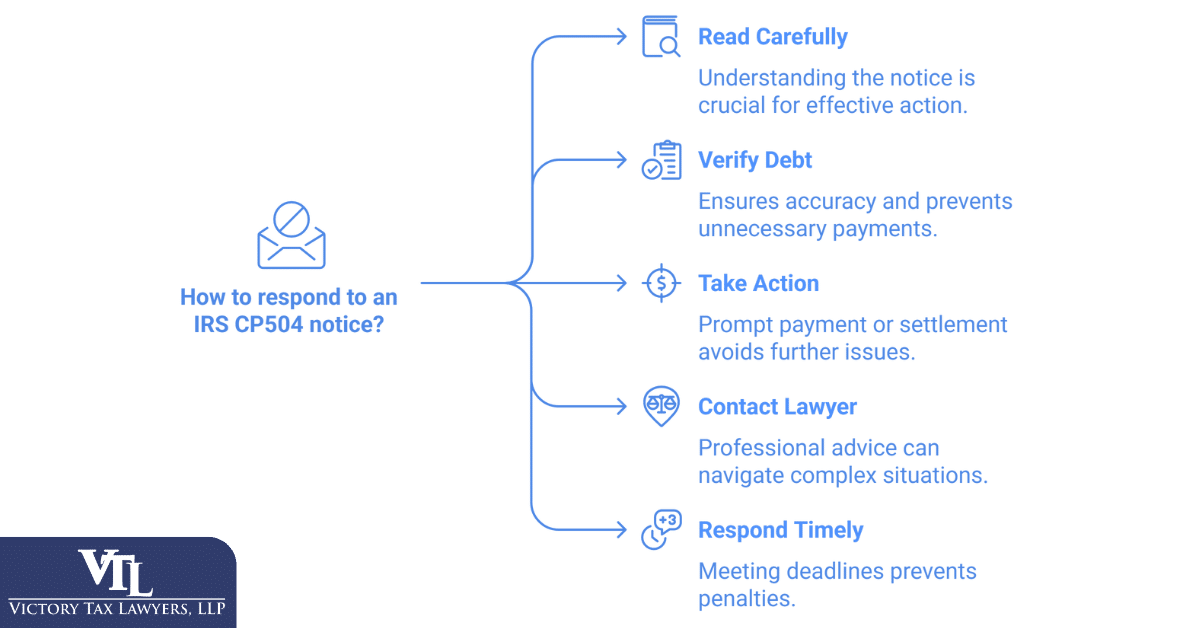
Receiving a CP504 notice from the IRS can be stressful. Nonetheless, if you understand its contents and immediately take prompt action, you can prevent further complications. Here’s what you should do if you receive one:
1. Read the Notice Carefully
Don’t go without reading the CP504 notice carefully. Identify the total amount the IRS is claiming you owe and note the due date for payment or response. You could face consequences, such as liens, levies, or wage garnishments, if you don’t meet the deadline.
Next, make sure the details in the notice match your tax account records. Double-check the balance, any interest or penalties applied, and the tax year in question. If anything seems off or you notice discrepancies between the notice and your records, address the issue promptly to avoid further complications.
2. Verify the Debt
Next, confirm the accuracy of the debt. Log in to your IRS online account to check your tax account details and confirm whether the amount shown matches your records. If you believe the IRS has made an error, contact the IRS as soon as possible to dispute the debt.
Make sure to gather all relevant supporting documents like payment receipts and tax returns. These documents will strengthen your case when communicating with the IRS.
3. Take Immediate Action to Pay or Settle
Pay the amount you owe in full as soon as possible to stop any further penalties and interest from accruing. However, if you’re unable to pay the outstanding balance, there are payment options available to help you manage your debt:
- Installment Agreement: The installment agreement option allows you to make monthly payments to the IRS over time. It’s a manageable solution if you can’t pay the entire balance upfront. You can review your tax account status and set up a payment plan online through the IRS website.
- Offer in Compromise (OIC): This is for individuals facing financial hardship. If your financial situation is dire, you may qualify to settle your tax debt for less than the full amount owed through an Offer in Compromise.
- Currently Not Collectible (CNC) Status: You can request a Currently Not Collectible status if you’re facing significant financial difficulty and can’t pay. If approved, collection is temporarily suspended, allowing you time to stabilize your financial situation.
4. Contact a Tax Lawyer
If you’re dealing with significant tax debt, it’s a good idea to consult a professional. IRS enforcement actions (such as levies, liens, or wage garnishments) can become a real risk if the issue isn’t addressed promptly. A tax attorney can help you understand your options and guide you through solutions like an installment agreement or an Offer in Compromise. If you’re challenging the debt, they can represent you during hearings and communicate with the IRS on your behalf. In many cases, a tax lawyer can also work to stop active levies and help protect your financial well-being.
5. Respond Before the Deadline
It’s crucial to respond before the deadline specified in the CP504 notice to avoid enforcement actions from the IRS. Even if you’re setting up a payment plan, be conscious of the deadline. Apply before the due date to prevent penalties from accumulating. Don’t forget to keep detailed records of all correspondence and payments you make. You will need it to dispute any charges or show proof of compliance later on.
3 Ways to Avoid Future IRS Collection Notices

To avoid future IRS collection notices, there are a few proactive steps you can take:
- Stay Current on Tax Filings and Payments: Ensure that you file your tax returns on time and make timely payments to avoid any overdue balances.
- Set Up Automatic Payments or Estimated Tax Payments: If you find yourself owing taxes regularly, consider setting up automatic payment arrangements, like an installment agreement, or making estimated tax payments to prevent any surprises.
- Work with a Tax Professional for Long-Term Tax Planning: A CPA or tax attorney can help you develop a strategy for managing your taxes and reducing the risk of future issues. They can guide you in structuring your finances in a way that aligns with IRS requirements.
Need a Tax Lawyer After Receiving the CP504 Notice?
It’s important to act quickly after receiving a CP504 notice. Delaying your response can lead to serious consequences, such as the IRS filing a Notice of Federal Tax Lien or seizing your state income tax refund. Prompt action helps you avoid these outcomes and keeps your options open.
There are several payment options available. You can set up an installment agreement, submit an Offer in Compromise, or apply for Currently Not Collectible status. Choose the right option based on your financial situation and IRS guidelines. If you’re unsure of your next steps or if the debt is too large to manage alone, seeking professional tax assistance is highly recommended.
At Victory Tax Lawyers, we have lawyers who can help you respond effectively to a CP504 notice and work toward a resolution that fits your situation. We’ll help you handle the complexities of IRS collections, negotiate settlements, and protect your rights. Get a free consultation today and receive professional support from the best tax lawyers.