
When filing your taxes, the question of whether to keep receipts often arises. Receipts substantiate your claims to the Internal Revenue Service (IRS) that certain transactions indeed took place. They serve as proof of your expenses and help you back up your deductions before the IRS. For anyone who itemizes deductions, having proper documentation is key in order to be able to claim all eligible personal and business expenses.
But what if for one reason or the other you no longer have your receipts? Perhaps you lost them, or maybe you never even collected them in the first place. It’s a more common issue than you might think, as many taxpayers don’t realize the role receipts play in protecting them from IRS scrutiny. If you don’t have your receipts, the good news is you may still be able to claim some or all of the expenses if you’re able to provide some form of proof to the Internal Revenue Service.
If you’re unsure how to handle a missing receipt, Victory Tax Lawyers are here to help. We are a team of expert tax lawyers offering unmatched tax relief services to help taxpayers tackle their tax concerns successfully while minimizing penalties and interests. Our tax professionals can help you reconstruct your records and identify adequate proofs for your tax deductions. No need to worry further about a missing receipt, take advantage of our free tax attorney consultation to find a unique solution for your tax matter.
Read on to understand how to claim your deductions even if you’re missing your tax receipts. We’ll also cover the alternative forms of documentation you can use to support your claims. Finally, we’ll share practical tips to help you avoid this situation next tax season.
Are Receipts Necessary for All Tax Deductions?

The plain fact is, not every tax deduction requires a receipt. However, having proper documentation is necessary at all times to help you avoid tax audits and other possible complications that arise when the IRS isn’t completely satisfied with your records.
Keep in mind that the IRS expects taxpayers to maintain “adequate records” that clearly show the what, when, where, and why of an expense. This allows them to verify that the expense was for a legitimate business purpose, because only expenses that are 100% business-related are claimable as deductible expenses to reduce your tax liability. If you’re a business owner, the implication would be that you’re expected to keep your receipts, invoices, bank statements, and other paperwork that substantiates your claims.
If you’re lacking this documentation, it may be hard to prove to the IRS that they took place. This can result in the IRS denying your deductions altogether, especially when the figures in question are significant or the transactions are complex. Furthermore, the IRS requirement for maintaining receipts comes into play when you are claiming deductions or credits on your federal income tax return. Particularly, you’ll need receipts for:
- Deductions: The IRS requires you to have a receipt or other forms of documentation to support the legitimacy of your business expenses.
- Credits: To qualify for various tax credits, you must maintain records that prove your eligibility and expenses.
- Medical Expenses: Receipts are needed for medical expenses above a certain threshold. This can include insurance premiums, prescription medications, doctor visits, and more.
- Travel Expenses: To claim deductions related to business travel, you need receipts to back up these expenditures.
- Business Asset Purchases: If you purchase assets for business purposes, such as machinery and equipment, you’d need the receipts to prove their purchase price, calculate depreciation, and expense capital allowance.
- Meals and Entertainment Expenses: Receipts or other documentation forms are required to substantiate the expenses related to business meals and entertainment. In some cases, the IRS can allow a standard meal rate.
- Casualty and Theft Losses: You’ll need detailed documentation, like police reports or insurance claims, to support losses from theft, fire, or natural disasters.
- Charitable Donations: For donations over $250, written acknowledgment from the charity is needed, not just receipts.
What Tax Deductions Can You Claim Without Receipts?

There are exceptions where you may be able to claim deductions even though you’re without receipts to substantiate your claims. Such exceptions include:
1. Deductions under $75
In cases where your expenses are minimal, perhaps below $75, the IRS may permit you to claim your tax deductions without receipts. Think of small incidentals like meals, parking, or minor supplies. In such cases, the record of such an expense would suffice.
2. Standard mileage rate rules
Another instance when you are not necessarily required to keep receipts for individual expenses, such as gas, maintenance, and repairs, is when you’re claiming the standard mileage rate for your vehicle expenses. You don’t need receipts for gas, maintenance, or repairs. However, you must keep a mileage record showing the business purpose, dates, and miles driven.
Another thing to remember is that when using the vehicle for personal reasons as well, you can only claim tax deductions for the portion of miles driven for business purposes, so ensure you’re pretty clear about that in your logbook.
3. Employer reimbursements
If your employer reimburses you for business expenses (and you’re not claiming them on your tax return), you do not need receipts. However, it’s wise to keep a detailed record of these expenses, including a computer log, a spreadsheet, or a diary for your own reference. The record must also show the reason for the payment, the payment amount, the business name and address, the name of the vendor, and the date of the payment.
4. Self-Employed Taxes
If you’re operating as a self-employed individual, you’re responsible for self-employment taxes, including employer and employee contributions to Social Security and Medicare. Note that the self-employed tax rate is 15.3% of your gross income. However, you can deduct your portion of this tax (50%) from your adjusted gross income, which requires no receipts at all.
5. Charitable Gifts Under $250
Cash donations under $250 to a qualified charitable organization are one of the few charitable donations that one can take without a receipt. However, the IRS requires proof of charitable contributions to claim a donation as a tax deduction. This proof can be in the form of a bank record (credit card statement, bank statement, or canceled check) or a payroll deduction. Acknowledgement letters may also suffice. For donations over $250, written acknowledgment from the charity is needed as well.
6. Standard Deductions
You don’t need receipts to claim standard deductions such as mortgage interest, student loan interest, medical expenses, HSA contributions, or IRA contributions. However, for itemized deductions, receipts are crucial for things like medical expenses, charitable contributions, or property taxes.
Acceptable Proof When Receipts Are Missing

If you’re missing important receipts, don’t panic. The IRS allows you to present alternative proof to support an expense claim. This is where the Cohan rule comes into play. The Cohan rule permits business owners who lack the required receipts to show alternative proof of documentation to support their claimed expenses. If you’re without receipts, you should gather all the records you can. The IRS may accept alternative documentation such as:
Bank/Credit Card Statements: Your bank statements, containing the vendor name, date of expenses, and amount, can be helpful in verifying expenses in the case of missing receipts.
Invoices or Canceled Checks: Invoices and cancelled cheques can show proof of payment or agreement.
Mileage Logs & Appointment Calendars: When it comes to travel expenses and business trips, you can provide your mileage logs and calendar notations for records.
Emails & Photos: Emails and photos can serve as digital confirmations or time-stamped evidence of a purchase or service. If you have a photograph of the item purchased or the details of purchase in your email, you may be able to retrieve information from the store’s website.
Phone Location Records – Your phone’s GPS or your carrier’s records can help track your whereabouts. Even social media check-ins can serve as informal evidence in a pinch.
What Is the Cohan Rule in Tax Law?

The Cohan Rule is an IRS provision that allows taxpayers to claim reasonable expenses even without receipts, provided they can reasonably estimate the expense. It offers some flexibility when exact records aren’t available.
This rule became famous on account of the 1930 case of Cohan v. Commissioner. In that case, Broadway legend George M. Cohan was audited by the IRS, which disallowed many of his claimed business deductions because he lacked proper receipts for them and had instead estimated his expenses.
When the IRS challenged his methods, he explained to the court that he was too busy to maintain all the necessary documentation. The court acknowledged that Cohan had legitimate business expenses and ruled that while he could not provide exact amounts via receipts, he was still eligible to claim them if deemed “reasonable and credible.” This case set a precedent known as the Cohan Rule.
Under the Cohan rule, taxpayers who are unable to produce documentation to support the items on their tax return may rely on reasonable estimates and claim business expenses on such estimates, provided there’s some factual basis for it.
Since this rule was introduced, it has become a given that the IRS may accept estimates if you prove that an expense likely occurred. However, this is only a part of it. The IRS has implemented measures to prevent taxpayers from estimating excessively high amounts. Therefore, without a receipt, you can only deduct the standard minimum amount for a service or item as determined by the IRS.
Although the Cohan rule remains useful for tax purposes, it is limited and its application varies by unique tax circumstances. Also, in application, estimates must be reasonable, consistent, and well-documented.
What Is an IRS Audit Notice and Why Did You Get One?
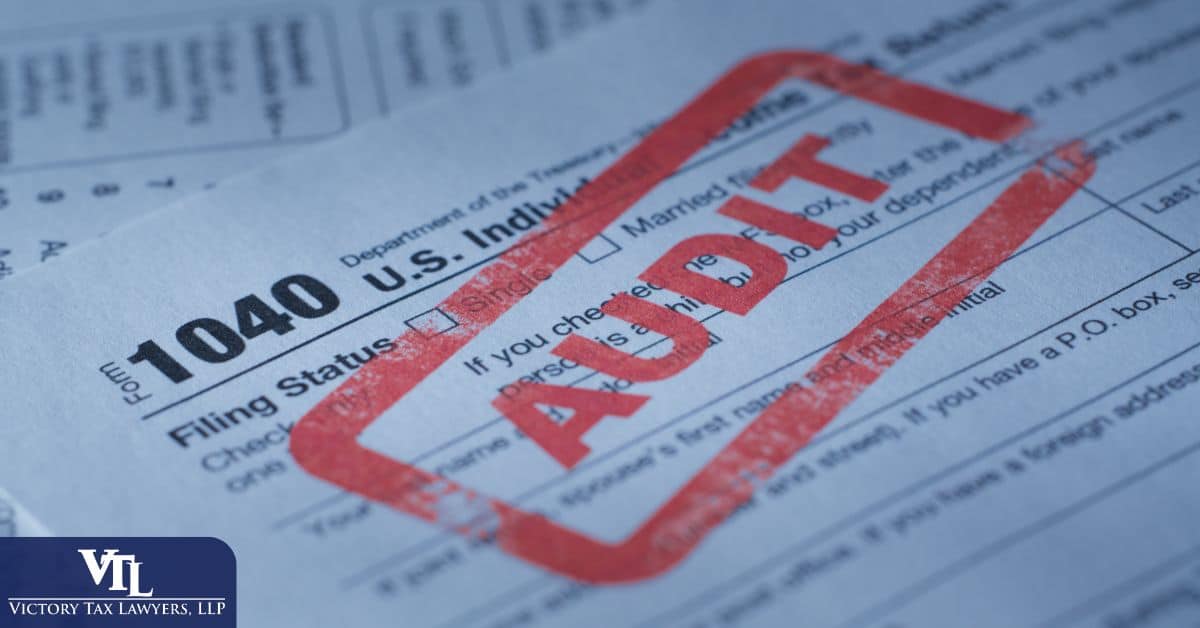
An IRS audit notice is a formal letter from the IRS notifying you that your tax return is being examined for accuracy. Whether you’re an individual taxpayer or a business owner, receiving an audit notice means the IRS has questions about something on your return and may need additional information or documentation to verify your filing. Common reasons the IRS will send a taxpayer an audit notice include:
- Math errors: Simple mistakes in your calculations, such as discrepancies in reported income, credits, or deductions.
- Missing Information: For example, W-2s or 1099s reported by others (like employers or clients) but not included in your return.
- Large or unusual deductions: Deductions that are significantly higher than what’s typical for your income level.
- Excessive deductions or credits: These are business expenses or claims that don’t meet the IRS guidelines or seem inconsistent with your job or industry.
- Earned Income Tax Credit (EITC) or Child Tax Credit: If there are concerns about your eligibility.
- Mismatch in third-party reporting: When banks, employers, or clients report different figures than you did on your return.
The IRS usually sends an audit notice by mail, which offers the advantage of receiving a proof of delivery notice. In rare cases, the IRS may also send a notice through in-person contact. The notice will specify information about why your return is being reviewed, what documents the IRS needs from you (if any), and how you should proceed.
Selection for an audit does not always suggest there’s a problem. The IRS selects tax returns for audit using several methods, such as random selection, red flags, or related-party audits (e.g., if a business partner is audited).
Dealing with an IRS audit can feel like navigating a maze, especially if you lack the knowledge of the right steps to take upon getting this surprise. If you feel lost at any point, it’s okay to ask for help from your tax attorney. A tax attorney’s in-depth knowledge of the tax code and tax environment is one sure way to navigate an IRS audit with ease. They not only provide expert guidance, but they also represent you before the IRS. This expert audit representation ensures that your rights are protected and you get fair outcomes.
What Happens if You’re Audited Without Receipts

Receipts are your best proof when it comes to backing up business expenses. Supporting your case with a receipt, therefore, speeds up the rigorous IRS audit process. But what happens if the IRS does select your business tax return for an audit and you don’t have receipts? Here are a few steps you could take in such a scenario:
1. Contact Your Vendor for Duplicates
This is one of the easiest solutions for a missing receipt. Visit the vendor’s location and ask them for a copy of the lost receipt. Ideally, a merchant is expected to keep a record of every transaction that occurred within a specific timeline. This makes it easier to readily provide another copy of the receipt for customers. Although this approach may seem stressful, it’s worth trying. Be prepared—some may charge a small fee for reissuing these documents.
2. Show a Bank Account Statement
While records in your bank statements are not as strong and detailed as receipts, they can suffice as supporting documents to claim your income tax returns. Your bank and credit card statement contains information such as the type of expenses, transaction date, and amount, and the business’s name where the transaction occurred.
That said, statements don’t always explain why a purchase was made. For instance, a restaurant charge could be personal or business-related. To ensure your record is clear enough, consider using a business bank account for all business-related transactions.
While bank statements, credit card statements, canceled checks, or your check register may not explain why a payment was made, they provide a paper trail of the transaction and may answer other questions, such as when payments were made, to whom, and for how much.
3. Use Apps to Track Expenses
Going forward, digital expense trackers can save you a lot of headaches. Apps like QuickBooks, Expensify, or even your bank’s app can help you log expenses, store digital receipts, and keep your records organized and accessible. If you’re missing a physical receipt, you might be able to pull up email receipts or records stored in these apps.
4. Handle Audits Professionally
If you’re facing a tax audit, it is highly advisable to seek professional help to navigate the process effectively. Tax professionals are knowledgeable about tax laws, regulations, and documentation requirements, and can help guide and advise taxpayers through various aspects of the audit process.
If the audit can’t be resolved through negotiation, you might have to take your case to tax court. Here, the expertise of a tax attorney is invaluable. Your attorney will not only provide expert legal advice on the case, but they’ll also help you build your case, represent you, and help you secure favorable settlements with the IRS
If you’re a business owner, keep in mind that you may face more scrutiny if you don’t have receipts, especially for larger expenses, as business deductions tend to be more thoroughly examined by the IRS. If you’re starting a business and need to know how best to manage your records, the IRS Pub 583 provides relevant information and illustrates a recordkeeping system.
How to Reconstruct Missing Tax Records

If your records are missing, the IRS allows you to reconstruct them to avoid tax issues. Reconstructing tax records isn’t the same thing as forging fake receipts. Creating fake receipts is considered tax fraud and can lead to serious consequences, including criminal charges. When you reconstruct your missing tax records, you’re simply rebuilding records based on actual transactions to support your tax claims.
Having said that, here’s how to get started:
- Contact Vendors for Duplicates: A quick way to help you rebuild your records is to contact your bank, vendors, suppliers, and other service providers to ask for digital copies or duplicate invoices and receipts. Many businesses retain transaction records for months or even years and can provide copies upon request.
- Gather Bank Statements and Other Financial Records: Your bank and credit card statements often provide enough details, such as vendor names, transaction dates, and amounts, to support your claims in the absence of receipts.
- Search Emails or Online Orders: You can also search your emails if the company sent you an email confirmation to get the details of the purchase. If you ordered the product or service online, check your order history on the company’s website.
- Use Apps to Track Expenses or Mileage: Apps provide a streamlined solution for recovering IRS tax records and lost documents, and can be helpful in the case of missing tax records to track expenses. Accounting software like QuickBooks and Mileage trackers like MileIQ can help reconstruct missing expense records by importing past transactions from linked accounts or estimating your mileage based on your travel patterns.
- Work With an Accountant or Bookkeeper: While it pays to personally gather as much evidence of your purchases as possible, working with an accountant or bookkeeper makes the process much easier. A professional can guide you through the reconstruction process, ensuring your records align with IRS standards. They can also help you organize and interpret your financial documents to avoid errors.
Facing a Tax Audit or Missing Receipts?
IRS tax audits can be overwhelming on their own, and when incomplete records are thrown into the mix, it becomes even more difficult to scale through unscathed. Which is another important reason to have organized records from the get-go. Luckily, if your receipts are incomplete or you’ve not been keeping detailed financial records from the start, the IRS allows you to present alternative documentation such as bank statements, canceled checks, and vendor confirmations.
Facing a tax audit or missing receipts? We highly recommend seeking professional assistance to navigate the process effectively. If you need to work with the best tax lawyer, our team of tax professionals at Victory Tax Lawyers can help guide taxpayers through various aspects of the audit process and assist in preparing a strong case to present to the IRS. Visit our office or book a free consultation with us today.
✓ Attorney-Reviewed Content
This content was written and reviewed by the licensed tax attorneys at Victory Tax Lawyers, LLP. Our attorneys specialize in IRS tax relief and are licensed members of the California State Bar with a nationwide practice.
Last Reviewed: 2026 · Meet Our Attorneys →